Speech Therapy: Blood! Vengeance! Characters! (Round 2)

Transcript:

Last episode! Do Tekken: Blood Vengeance and Final Fantasy VII: Advent Children create fight scenes that also entertain non-fans of the games they’re based on? Specifically, do they create characters within the course of the film that non-fans can sympathize with or understand?

Now! Let’s take a look at the final fight scene in both movies. Both fight scenes are sort of like a final boss fight where the boss is a character that fans are familiar with but has only been mentioned briefly in the course of the movie. From the boss’s first appearance to his defeat, Advent Children Complete’s final fight lasts roughly 10 minutes, Advent Children’s lasts 6 minutes, and Tekken’s lasts about 25 minutes.

Do the movies succeed in setting up the characters and story so that non-fans are also engaged in the battle and entertained for the duration of these fights?

Tekken fairs very poorly… but for reasons completely unrelated to the introduction of a new character. As soon as this boss fight starts, the two girls we’ve spent the entire movie with cease to have any importance. This fight is between boss Heihachi Mishima, Kazuya Mishima leader of G Corporation, Jin Kazama leader of Mishima Zaibatsu, and Shin Kamiya.

The character that we know best is Shin Kamiya. As sort of the driving force of the movie, he’s carrier of the M gene, a genetic mutation that makes him immortal. Jin and Kazuya have been after him to gain immortality, which is how the three came together for this final fight. Unfortunately, whenever Jin and Kazuya meet, Jin’s grandfather and Kazuya’s father, Heihachi appears as well. This is all part of Shin’s plan though. He wants to kill Heihachi, the man behind the experiments performed on him to produce the M gene.

Shin’s not really someone we can sympathize with though. He’s developed no meaningful relationships with the main characters and shown himself only to be a pathetic, suicidal asshole. We need not worry too much about it though because, despite his immortality, he dies almost immediately, assumedly by being impaled on a few stray hairs.

This leaves us with two characters who combined have had less than five minutes of screen time. Jin is perhaps the most likely one we can sympathize with. He died as badly as he lived, but Shin’s death ignites Jin’s rage towards Kazuya and Heihachi. The Mishima family has killed an innocent in their family quarrel, and this isn’t the first time it’s happened. Jin wants to kill his father and grandfather to end the bloodshed. Heihachi and Kazuya simply want to kill the other two for no reason. Jin is also a friend of Shin and Xiaoyu, the protagonist. What sympathy we can have for Jin is forgotten though when he carelessly tosses Xiaoyu aside, and we’re reminded that he doesn’t care if he destroys the entire world in his quest to destroy his family.

Meanwhile, the main characters are on the sidelines trying desperately to assert their purpose in an ultimately meaningless fight. They seem to be trying to emphasize the horrors of violence, but because this battle is taking place in a castle in the middle of nowhere between near invincible characters that we don’t know or like, there’s nothing horrific about it. In fact, we’re hoping that all three of them kill each other as quickly as possible so that they stop breeding. Xioayu’s robot friend Alisa becomes a casualty, but her apparent death does nothing to stop the violence or improve Jin’s character. Xioayu is the only one in the audience or the movie who is stupid enough to believe or care that Alisa is dead. Jin put her in standby mode so that she wouldn’t get in the way of him murdering his family.

Advent Children does a better job at creating an entertaining fight scene that we care about without needing all the backstory that fans have. This time, we have the benefit of being with Cloud, a character that we’ve gotten to know pretty well in the course of the movie. By this point, Cloud has realized what an ass he’s been to his friends, and he’s tried to make up for that. He’s defeated horrible monsters that have destroyed the city, slaughtered innocent civilians, and attacked his friends. He’s also fought Kadaj, who is responsible for kidnapping and enslaving children, destroying the city, killing people, and possibly infecting innocents with a horrible illness. Overall, Cloud is someone we can root for.

The moments leading up to the fight do a great job at getting rid of any doubts we have about how bad it would be if Sephiroth were resurrected. As soon as Cloud realizes that Kadaj knows how to recreate Sephiroth, his cocky attitude changes to panic. We recognize Sephiroth from the film’s introduction when he appears, and Cloud shows us how we should feel about this. Panic is something we’ve never seen from Cloud before, and he’s fought a giant monster, hordes of beasts, and three guys who are nearly as strong as he is.

We’ve seen: “Ah crap. I dropped my sword.”

“That guy! I should stop hallucinating!”

“Damn kids!”

And “What the hell?”

But never “Oh shit!”

Sephiroth’s danger both to the world and to Cloud is further enforced when we see what he can do. We’ve spent the movie with characters that can defy gravity and destroy structures with a single punch or sword swing, but Sephiroth still manages to place himself on an entirely different level. Compared to Sephiroth, Cloud and the others are really only high jumping. They need to launch themselves off something, like the ground or the power of friendship, and eventually, they fall. Sephiroth can outright fly. He can also destroy structures without touching them and manipulate the weather without Materia.

[Gifts from mother?]

Yeah, whatever.

These elements introduce the possibility that Cloud might fail. He may even be killed. We’ve grown to like Cloud and the destruction of the world and its inhabitants is never a good thing, so even if we’ve never played Final Fantasy VII and could care less that Cloud is fighting Sephiroth in a glorious CGI movie, we still have enough reasons to engage in the fight and root for the hero.

At the end of the day, Tekken: Blood Vengeance and Final Fantasy VII: Advent Children are fan service films, and there’s bound to be some things that outsiders won’t understand or appreciate. That’s what makes fan service films great! Unlike most movies out there, fan service films target a very specific audience, which can produce unique, awesome films. Some fan service films like Blood Vengeance target their fans only. I’m sure Tekken fans are much more appreciative of the glorious battle between Heihachi, Jin, and Kazuya than I am… at least I hope they are. Other fan films like Advent Children are accessible enough to attract new fans to a great game and give a nod and wink to old fans. Either way, these films give someone out there something that they’ve always wanted to see.

Talk at you next time!
Speech Therapy: Blood! Vengeance! Characters! (Round 1)

Transcript:

I discovered this film recently: Tekken: Blood Vengeance. I’m not a fan of Tekken. I don’t know anything about its story or characters. The movie had an art style reminiscent of Advent Children’s and probably would have some great fight scenes though, so I figured at least that’d be entertaining. Besides, I wasn’t a Final Fantasy VII fan the first time I saw Advent Children, and I loved that movie anyway. It could happen again. You never know.

Blood Vengeance was everything I expected… and more.

There were pretty, action-packed fight scenes, but I didn’t really care about them though. Something was missing. Even for a fan film, Blood Vengeance is pretty mediocre, but its fight scenes were visually similar to Advent Children’s. What’s the difference? The answer is simple: I don’t understand what motivates any of the characters to fight. Blood Vengeance is heavily reliant upon its audience’s knowledge of the Tekken universe.

I had to wonder if Advent Children was any better. Unlike what I did with Blood Vengeance, I didn’t go into Advent Children with absolutely no knowledge of what I was about to watch. I’d played through the first disc of Final Fantasy VII. I recognized Cloud and most of his friends. I knew who Aeris was and that… spoilers… she dies. I knew who Sephiroth was. Perhaps this previous knowledge was the only reason I could engage in the characters’ battles…

No. Surely, surely, Advent Children isn’t this bad at character development!

Let’s compare the first fight and the last fight in Blood Vengeance and Advent Children to see what makes one more entertaining than the other for non-fans.

The first fight scene in Tekken: Blood Vengeance is also the first scene in the movie, making it even more important to introduce the characters and their motivations. The scene begins with Nina Williams, who appears to be on the run. She is ambushed by a giant semi-truck driven by Anna Williams and seems to expect it, further suggesting that she’s just done something wrong. Both women begin the fight by attempting to brutally murder one another. They emerge from the wreckage unscathed, call each other sisters, and continue fighting. The point of this fight is hidden in a single, easily-missed detail. Nina holds up a flash drive, an item she no doubt stole from Anna.

Good thing this scene and the next two make absolutely no sense if you miss it! Good thing also that the English translation of this movie is awful, but that’s beside the point.

So these women have a reason for fighting. Is it enough to sympathize with either of them? Not really. Remember these sisters started the fight by trying to brutally murder one another. Personally, I can’t relate to that without any background information. Can we ever sympathize with either of them? A movie doesn’t have to reveal all of its secrets at once after all. Once again, not really. In fact, the further we get into the movie, the more distasteful these women get.

Nina and Anna work for rival organizations, Mishima Zaibatsu led by Jin Kazama and G Corporation led by Kazuya Mishima respectively. Jin and Kazuya are after information on the M gene, a genetic mutation, for the sole purpose of using it to become immortal and more powerful. What’s in it for Anna and Nina? Why do they work for these crazy people? Anna spends the movie beating on the main characters and being evil for no reason. Nina briefly questions the possibility that her boss might destroy the world and then continues working for him.
She helps the main characters, but only to thwart G Corporation and piss off her sister. These seemingly good deeds are driven by her incomprehensible hatred and her company’s unexplained rivalry with G Corp, which aren’t noble or reasonable motivations.

In contrast, the first fight scene of Advent Children gives us plenty of information to speculate on why the fight happened and a character we can understand. We know a few things about Cloud’s personality. He’s negligent and moody, but at some point, he was nice enough to make some friends, ones who still care about him. He’s also somewhat vulnerable because of some pain in his arm. The audience is much more likely to have experienced depression and pain than to have experienced invincibility and mindless hatred, which already makes Cloud much easier to relate to than Nina or Anna even though we don’t know a lot about him yet. Loz, Kadaj, and Yazoo are still pretty mysterious, but we know that they’re childish and looking for someone. They also start the fight for no apparent reason, establishing themselves as the bad guys. The beauty of this seemingly pointless battle though is that Cloud is as clueless as we are, giving us another reason to engage in his plight. Most likely, this battle started because Kadaj and his gang wanted to fight for fun, which matches their childish behavior, and to gather information on “mother,” who Loz and Yazoo ask about soon after the fight begins.

Even if we have no idea what Final Fantasy VII is, Advent Children gives us plenty of clues to help us determine who our hero is, why we should sympathize with him, who the bad guys are, and why they are fighting. This extremely simple but effective character development lets us spend more time watching some great action and less time figuring out why we should care.

An audience member who’s never played Tekken before will have a much more difficult time getting into the action in Blood Vengeance since it gives us no reason to like anyone and few visual clues as to what’s going on. I’m not saying all characters need to be established as good or evil like Advent Children does. I suspect that Tekken is (or could be) full of morally grey characters with interesting relationships and motivations for their actions, and it’s a shame that this movie doesn’t take advantage of that. It could be more successful as a standalone film if it gave more hints as to who these characters are and why they do what they do.

Next episode, how do these films handle the final boss fight where the boss is someone only fans can truly appreciate? Talk at you next time and also…

[I’ll be your refrigerator.]

Speech Therapy: How to not kill the protagonist

Transcript:

Keeping with the theme of this branch of Speech Therapy, I was watching the end of Vexille and realized that I had seen this scene before.

Yup. This is pretty much the end of Final Fantasy VII: Advent Children where Cloud is the helicopter and Yazoo is… Vexille… Maybe?

Anyway, in Final Fantasy VII, Cloud’s survival works. It’s consistent with a major theme in the movie, it’s a relief after a suspenseful moment, and it’s believable. Vexille’s survival is more comical than anything. You’d think it’d be easy to let the protagonist live, but there’s more to it than blowing them up and having them emerge from the rubble.

So why does Cloud get to live and Vexille doesn’t?

Vexille, the protagonist of Vexille, works for a U.S. Navy special operations force. While she has fighting skills without it, most of her strength comes from the use of a mechanized suit of armor. There’s nothing that gives Vexille superhuman abilities or sets her apart from normal humans, but that doesn’t mean she can’t survive this explosion. The movie can still set what kind of damage the humans, androids, robots, and mechanized armors in it can withstand. It’s possible that in the world of Vexille a human could live through a helicopter explosion… if the movie set it up right.

Vexille is shown being hurt only once… kind of… We see her being shot at and then jumping into the ocean while in her mechanized suit, but we don’t know what exactly happened to her. Later, we find out that after the encounter, she slept for two days. As soon as she wakes up though, she starts running around and shouting at people. She’s either very resilient or was only taking an extended nap. So Vexille isn’t any help in gauging what damage she can take.

Fortunately for us, almost everyone else in this movie dies, which should give us plenty of information. From these deaths we can conclude that… there’s absolutely no way that Vexille should survive this. Without any information from the movie, we would probably suspect that the most durable things would be robots. These battle droids were probably built to withstand lots of damage.

These guys look tough.

But even they can’t stand up to an explosion. Vexille herself reminds us of this right before she takes out the helicopter when she explodes two robots. Perhaps the androids can withstand an explosion. No.

In fact, androids seem as fragile as humans. This android dies from blunt trauma and road rash.

What about humans in those mechanized armors? Nope.

Let’s take a look at a statistic. Of Vexille’s twelve companions that were on the ship to Japan and in the battle against the Jags, nine of them die in explosions. If Vexille lives through this helicopter crash at all, she should emerge from the rubble with survivor’s guilt.

The only explanation for Vexille’s survival is that she’s the protagonist. To make this scene more ridiculous, Vexille isn’t the only one who survives. The pilot and antagonist, Kisuragi, survives, too. Of course, he couldn’t die because Vexille’s companion, Mariah, had to hobble after him and die exacting her revenge for what he did to Japan first.

But you know… this movie is consistent in one way. We never see a human without mechanized armor die in an explosion. The machines were the problem the whole time!

Before I talk about how Cloud can survive the final explosion, let me clear up one thing. He didn’t survive because he’s invincible. Advent Children shows that Cloud can be damaged and even suggests that he can die. He spends a portion of the movie lamenting that he’ll die of Geostigma before he can live a full life for his deceased friend Zack. In the very first fight scene, he’s shot in the face and carries a scratch for the rest of the movie. He has doubts. He gets tired. He feels pain. He gets stabbed. He gets shot. He explodes.

Yes, Cloud goes through everything short of dying, but it’s not his own power that allows him survive all these injuries. A theme that runs through this movie is that it’s only with the help of Cloud’s friends that he can survive and thrive. He overcame his depression only after Tifa and Marlene hunted him down and yelled at him. His friends had to make a friendship tower for him to defeat Bahamut. Aeris and Zack appeared when he fought Sephiroth in Advent Children Complete, and memories of his friends empowered him to finish the fight in Advent Children. The three things most likely to have killed Cloud were Geostigma, Bahamut’s energy blast, and the final explosion. On all three occasions, he receives divine assistance from his friend Aeris. If Cloud’s friends didn’t help him, he would probably be dead.

This scene still manages to have some suspense. Cloud’s life is in Aeris’ hands. She could always choose to return him to the life stream instead. Also, the scene simply leaves us guessing as to Cloud’s state for more than fifteen seconds. But of course Cloud has to live! He has a second chance to live his life to the fullest and to make up for neglecting his friends.

These two reasons for living alone are more than I can say for Vexille. By the end of the movie, the Japanese race has been annihilated, many of her friends and colleagues are dead, and the only thing she has to look forward to is returning home with her boyfriend, who she doesn’t seem to care about. But Vexille’s indifference towards her love interest is a subject for another video.

For now, if you’re thinking about not killing a protagonist anytime soon… think about what you’re doing first. Talk at you next time!

Speech Therapy: In a world where everyone is dead

Transcript:

The one thing that Vexille does well is create an interesting world. Japan has become a wasteland ruled by Jags, which are pretty cool creatures. Everyone in the country has been forced to become androids. They’re doomed to lose their minds and become slaves for DAIWA Heavy Industries, the evil company behind the country’s transformation. DAIWA has managed to keep their actions a secret from the rest of the world for the past ten years via high tech isolationism. And America is dependent upon the robots that DAIWA and its slaves produce.

But the most interesting aspect of the movie is one that’s talked about the least. Humans spend more time interacting with machines and their computers than they do each other. In a way, they’ve lost their humanity. Perhaps this is part of the reason why they’ve grown to hate machines. Meanwhile, the androids of Japan are more alive than the humans are. Of course, it’s pretty easy to make something livelily than business meetings and death. A bustling marketplace is infinitely more alive than Captain Borg furrowing his brow in a dark room.

Even though the characters don’t talk about their loss of humanity often, this theme is present in nearly every character, most especially the protagonist. Vexille’s character is largely a mystery to me in that she doesn’t act like any normal person would. The first thing we see her do is blow bubbles before a dangerous mission. This suggests that she’s a jokester, she doesn’t take her job seriously, or perhaps she’s relaxed. For the rest of the movie, however, she takes her job seriously, freaks out about everything, and yells at everyone. Perhaps I just can’t relate to yelling at the nearest person as soon as anything goes wrong, but even Vexille seems confused by her strange behavior, often dwindling off into awkward silence when she realizes what she’s been shouting about.

Her romantic relationship with Leon is also perplexing. Vexille’s major motivation for fighting DAIWA Heavy Industries is to rescue Leon from the company’s grasp. This suggests that Vexille loves him enough to risk her life for him. The movie, however, never shows Vexille giving him any affection. EVER.

In every scene with Vexille and Leon in it, she never touches him. On five occasions, Leon touches her. He jumps on her to protect her when a building explodes, he hugs her and apologizes when she shouts at him for no reason, he pulls her to safety to prevent her from doing something stupid, he touches her shoulder with concern after a helicopter explodes on top of her, and he holds her comfortingly after the genocide of the Japanese people. On all these occasions, Vexille doesn’t touch him back.

Sure, Vexille looks at him when his back is turned and they make eye contact, like, three times, but for god’s sake, film is a visual medium! And a look from Vexille could mean anything!

“I like that ass.”

“I like that knife.”

“God you’re ugly.”

By the end of the movie, Vexille’s indifference towards Leon reaches comical proportions. Vexille spends most of the movie obsessing over rescuing Leon. As soon as he’s freed though, she ceases to give a crap about him and goes running after the bad guy she just met. For all we know, Leon is already dead or he could be scarred from whatever he’s been through in the past few days or he could have minutes left to live. And Vexille just runs off!

She leaves him to Mariah, Leon’s previous lover, who was tragically separated from him years ago. Mariah is an android, technically less human than Vexille is, but she actually shows Leon some affection. As soon as Leon sees Vexille though, he casts Mariah aside and runs to her. Vexille hasn’t seen Leon for days and even thought he was dead. She has no idea what condition he’s in or what he’s been through. But the first thing she says to him is…

[Where’s Mariah?]

Vexille is more affected by the deaths of two androids she just met than she is by Leon’s presence.

And yes, I’m certain these people are supposed to be in a romantic relationship! One scene takes place in assumedly Vexille and Leon’s apartment. Here, we see both of them naked and in bed. When Vexille gets up, she seems to know where she is, which suggests that they didn’t get drunk the night before and do it on a whim. Even in this scene, we don’t see Vexille interacting with Leon though.

Leon blindly loves Vexille even though she gives him no reason to and Mariah acts more human than both of them by being appropriately shocked and hurt. Is this the product of genius script writing? As much as I’d like it to be, probably not for two reasons.

First, this theme isn’t applied consistently. For example, Vexille’s human friend Zak explodes right in front of her. This is a friend she ignored when he was obviously injured earlier in the movie. She responds to his death with the same level of emotion that she does for the deaths of her android friends. This suggests that she only really cares about people, not when they’re machines, but when they’re dead or when she wants them dead.

Second, the characters never strive to change their questionable actions and behaviors or even recognize them. If Vexille were a better movie, this probably wouldn’t be necessary. Vexille’s quirks, for example, could simply be an interesting detail, something to give her character an extra twist for those who notice it. The problem is that, for me at least, this loss of humanity is by far the most interesting aspect, and by not exploiting it, the film comes off like a B-horror movie. All the characters are assholes, and by the end, everyone is dead or mentally scarred.

If humans worked towards caring about others within the course of this movie, it could do loads for creating an emotional attachment between the audience and all these dead people. As it is, Vexille does most of the work in telling us how we should feel, and I don’t know about you, but I can’t understand her, let alone feel her pain. Imagine if in the short time Leon and Mariah spend together, Leon recognizes what he’s missing in his relationship with Vexille and remembers the love he had for Mariah. Imagine if Vexille was more affected by Zak’s death and realized she should cherish her time with Leon. Imagine if Vexille’s experience with the androids inspired her to become more human. Mariah’s death might affect the audience. Vexille’s reunion with Leon might be rewarding. The extermination of the Japanese race might mean something.

And Vexille’s interesting world might have more than dead characters in it. Talk at you next time.

Representing a network of a non-linear book in Python

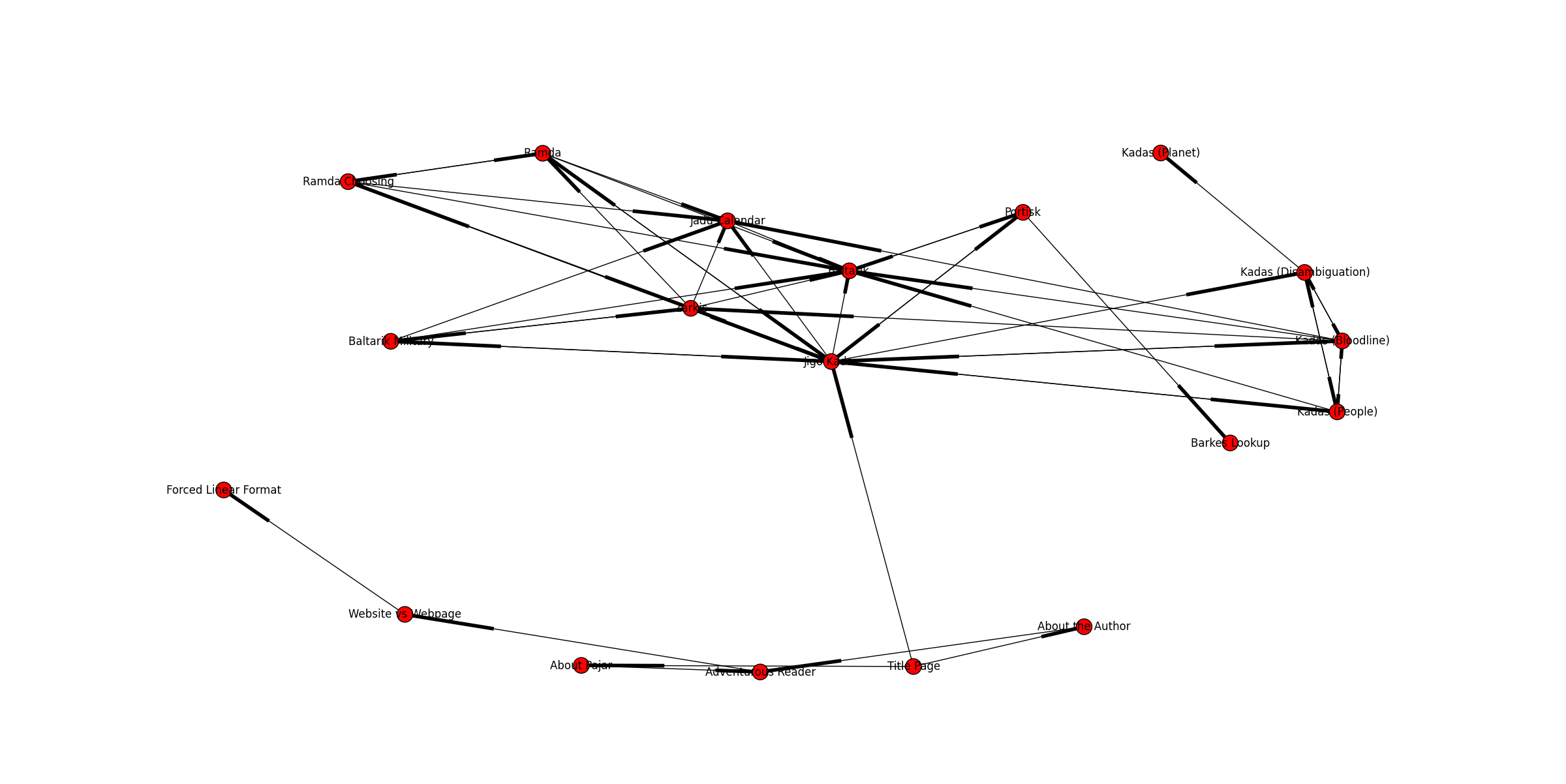
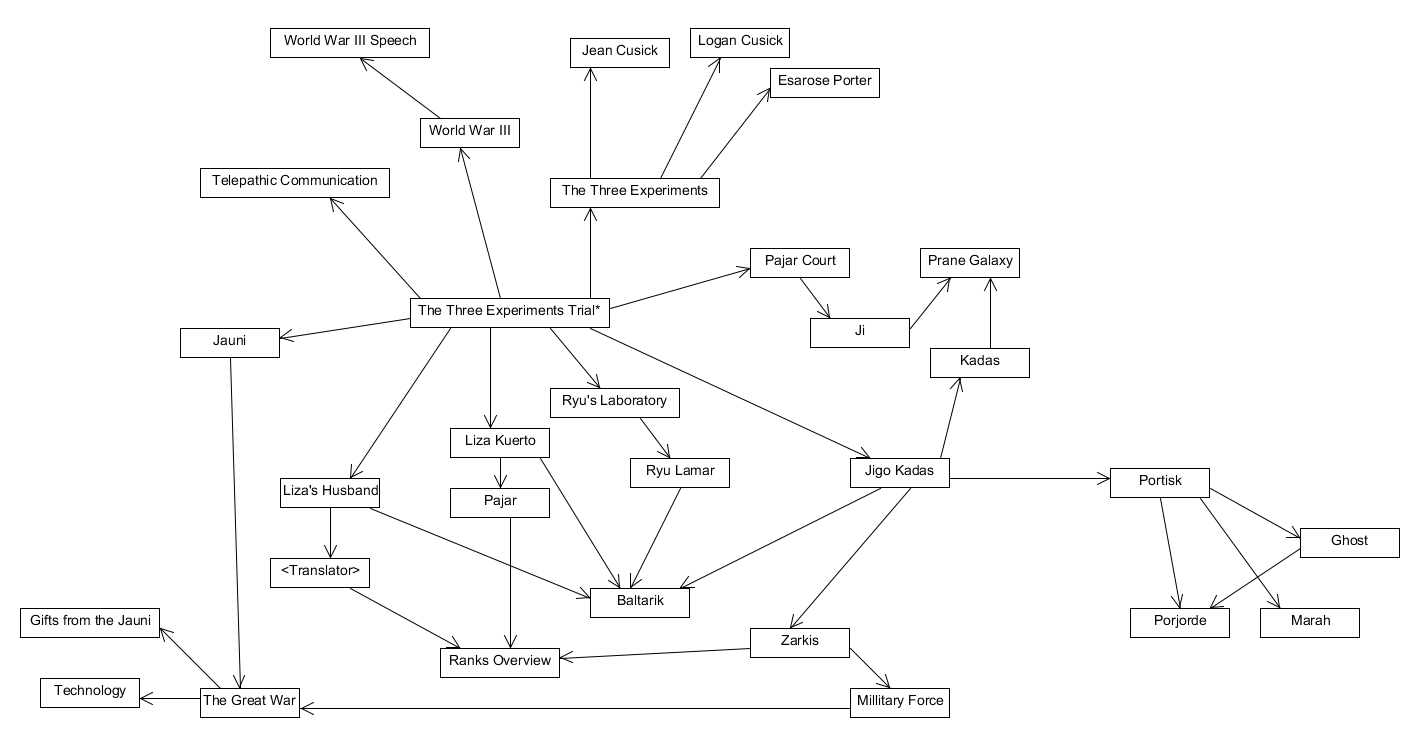
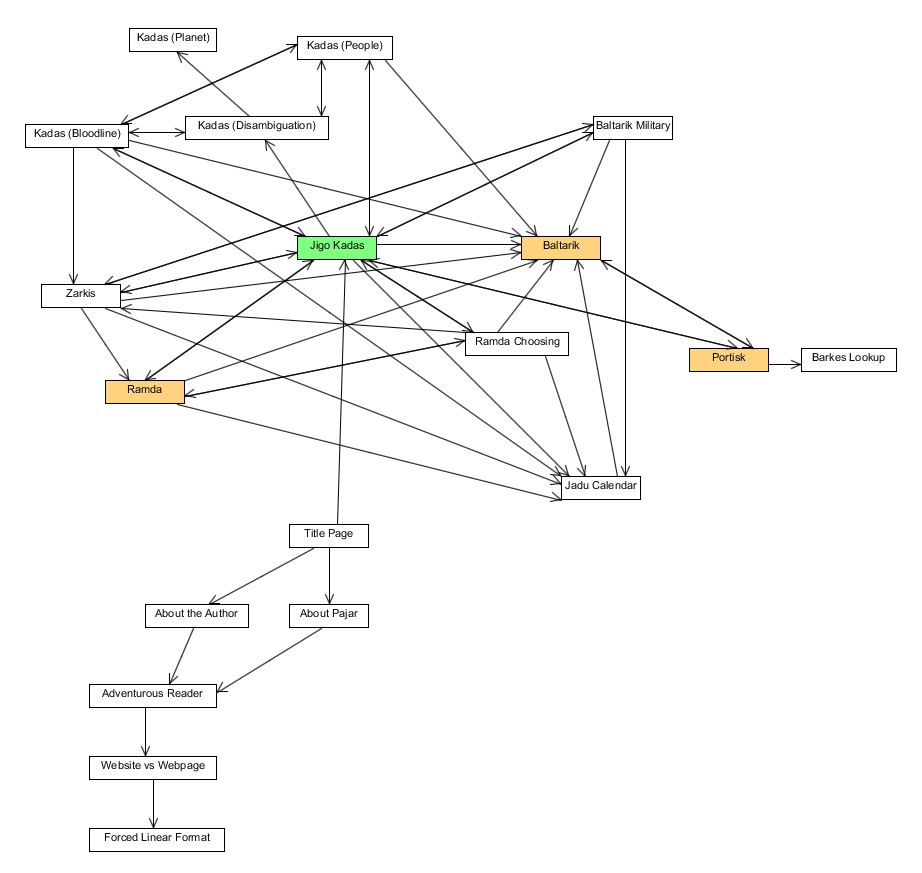
A sub-section of a non-linear novel was developed to test and demonstrate the non-linear eBook reader Adventurous Reader. The sections of this novel and how they connect together are shown in the networks below. It’s easy to see that this graph is going to get very messy, which is problematic because an interactive network will be the reader’s navigational tool as opposed to a table of contents. Considering that network visualization is a difficult problem to solve, I began research on how to better dynamically generate networks for Adventurous Reader.

Before visualizing non-linear book networks though, I needed a way to represent them. Adventurous Reader is being developed in Python, so I began by researching Python’s network/graph libraries and found networkx. This library stores networks as nested dictionary objects. Each node can store multiple attributes, including complex objects, and graphs can be directed or undirected. networkx also can write networks to files and read from files of various formats, which is important when it comes to saving the reader’s progress. It also has very basic node layout and visualization methods, but these are not powerful enough to create usable networks for complex non-linear novels.

While I will use networkx to represent the networks in code, I’ll need to look at other packages and libraries for visualization. The best options I’ve found so far are D3 and Graphviz. The problem is that D3 is a Javascript library and Graphviz is a C++ library. There is a way to use both of them in Python applications. I’ll need to determine which package will better fit my needs and then research how to integrate it.

UMLet layout
This network of non-linear book sections was handmade in UMLet.
networkx Spring Layout
This network has the same nodes as the network above but was generated using the default spring layout provided with Python’s networkx package.

Creating a map for a non-linear eBook

As part of the development of the non-linear ePub Reader Adventurous Reader, a story that takes advantage of how it will be viewed within it will be developed. This story should demonstrate that reading non-linear content within Adventurous Reader is significantly different from viewing it in a traditional linear reader and serve as an example of the types of non-linear and interactive books that can be written to engage readers in today’s world of fast-paced, short, various, and vast entertainments.

The story in development makes use of optional sections and storylines to create an experience that allows the reader to consume a short story but encourages them to explore the concepts discussed within it. In this way, the reader can have an experience that is as long or as short as desired. While there is enough material to make this story book length, developing a subset of the book’s content will suffice in testing the Adventurous Reader concept.

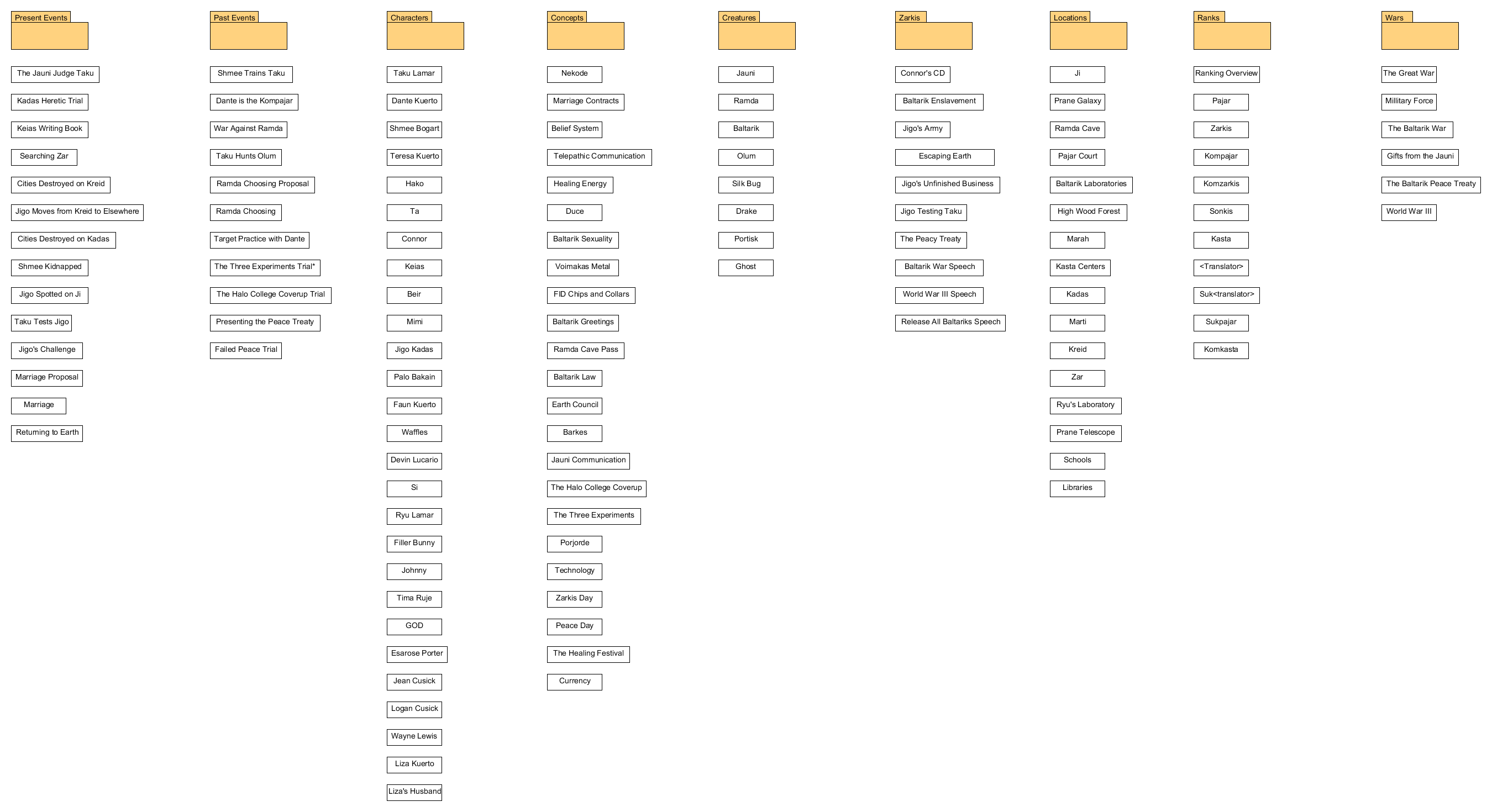
A preliminary list of all sections in the book.
A map showing how some sections of the book connect together.
A map showing the subset of the book that will be developed for demonstration. This map shows how some sections of the story will connect together.

eBook Reader Test

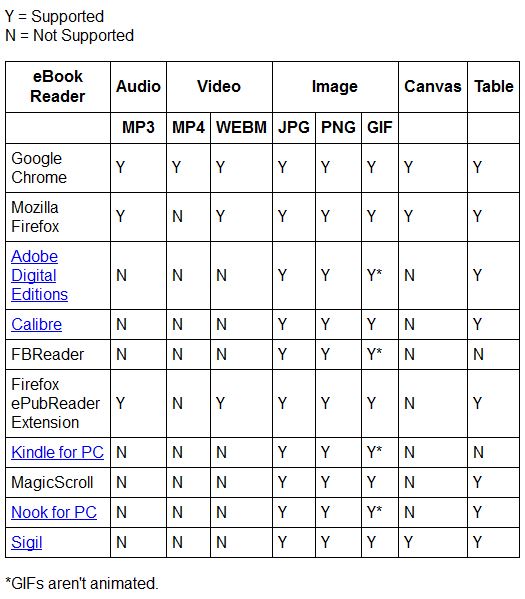
I created a test to determine what media various ePub and MOBI readers for PC could view: MP4, WEBM, MP3, JPG, PNG, GIF, Canvas elements, and HTML tables. The results are shown below.

eReaders For PC Summary

Natural Web

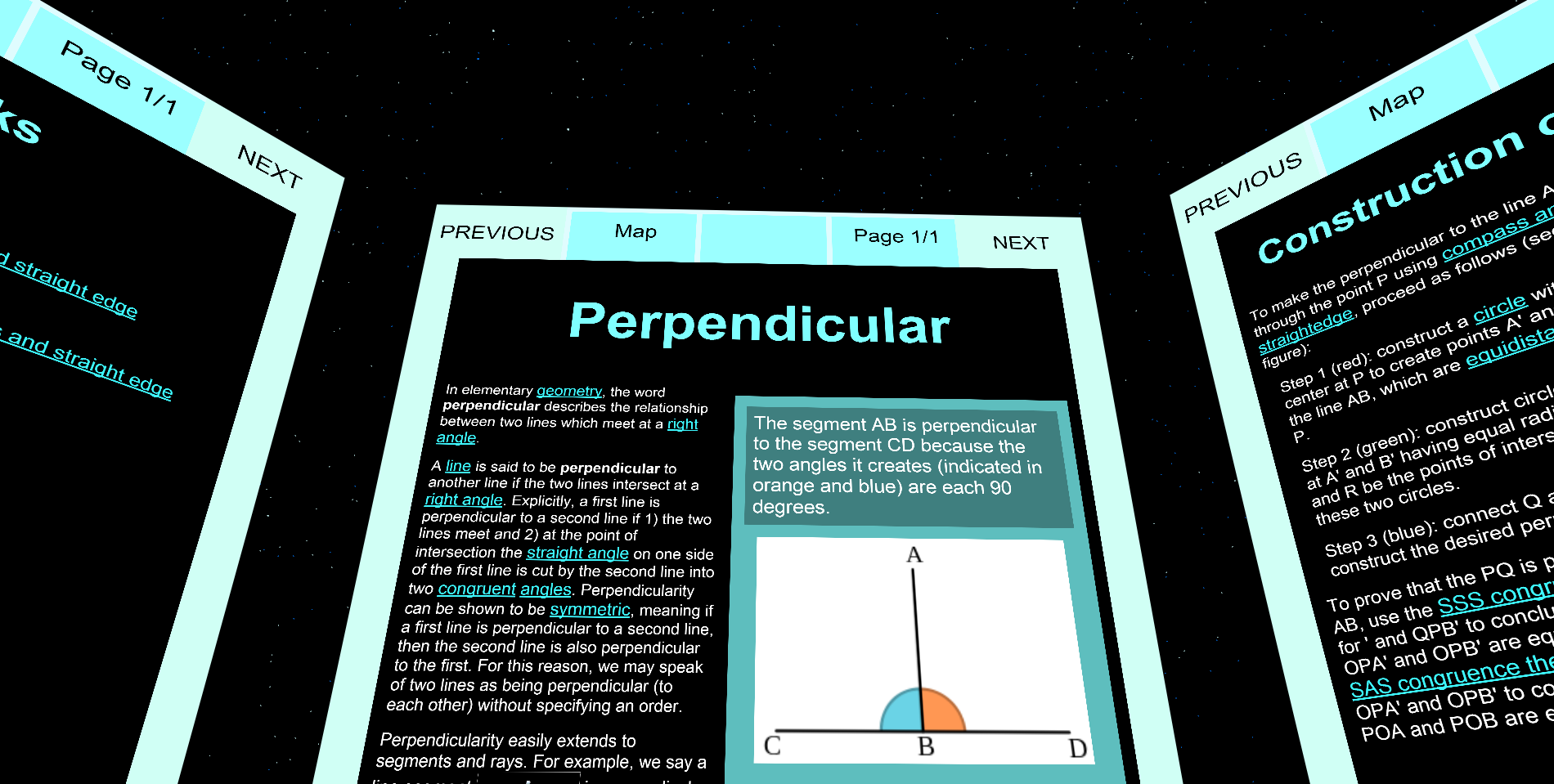
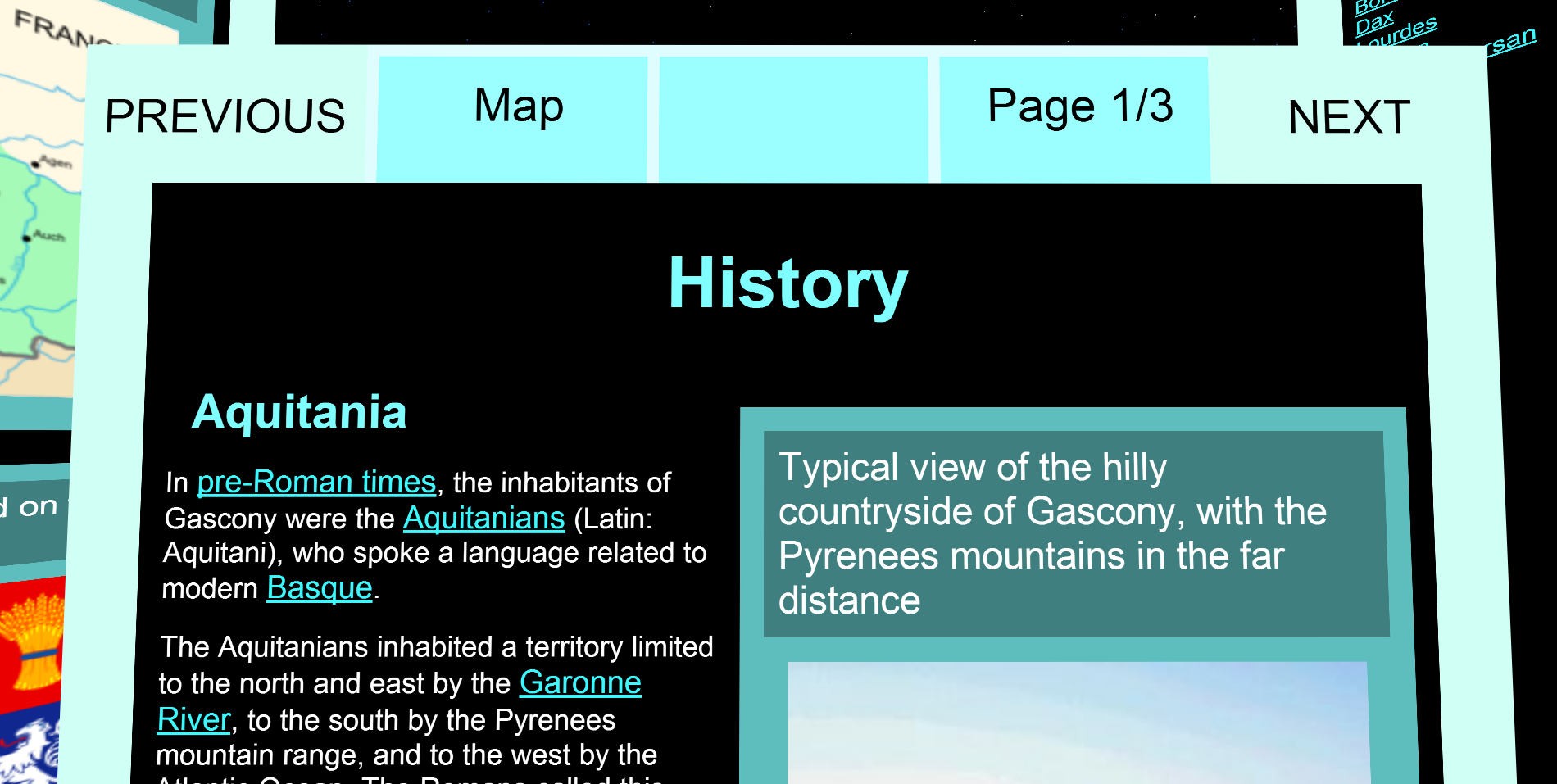
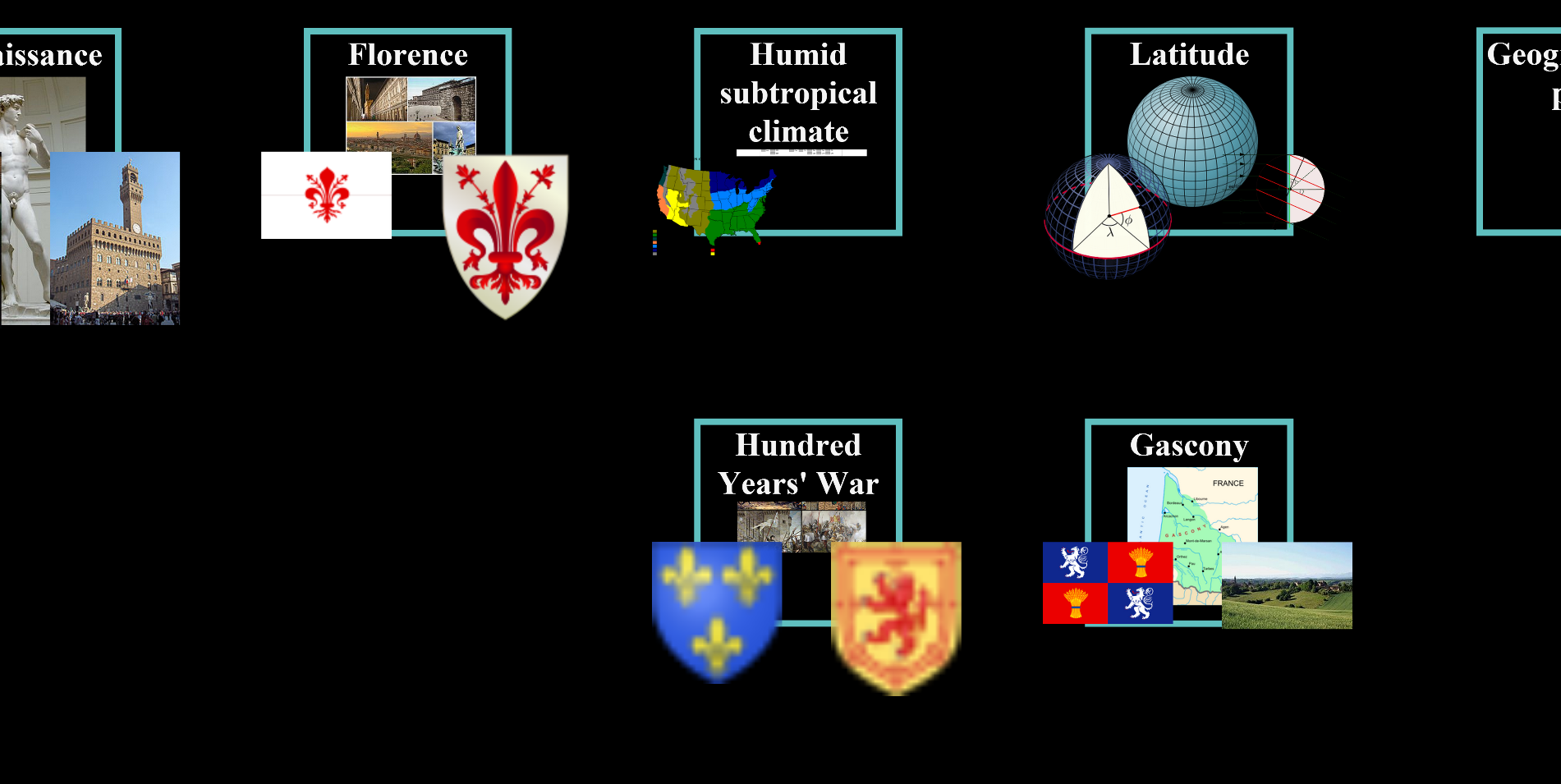
NaturalWeb1Natural Web is a 3D web browser for Wikipedia developed using Javascript and WebGL. This project attempted to make use of the x- and y-axis in displaying information to make it easier and faster for users to find a particular piece of information in very long webpages. Natural Web also keeps track of what pages the user navigates to and provides them with a map of all the paths they’ve taken.

Natural Web Zoom
Users can zoom into a panel and scroll up and down.

I wrote the code that placed the panels of HTML around the player, placed the nodes on the map, and animated the panels and camera.

Natural Web Map
Natural Web’s map

RPS Wars

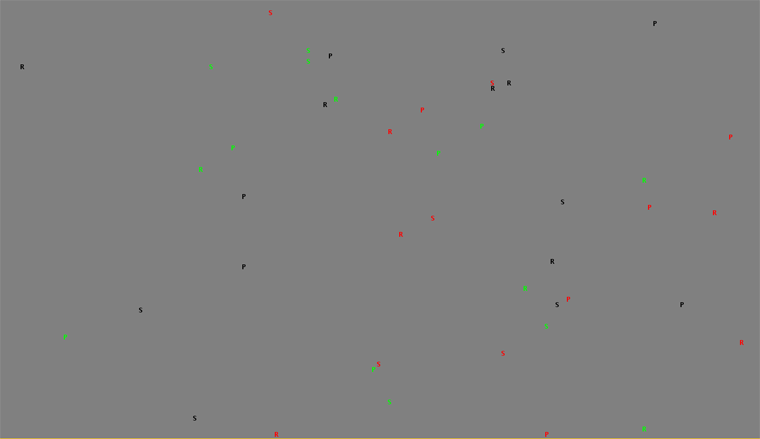
RPS Wars Battlefield
A snapshot of a battlefield in RPS Wars

RPS Wars is an experimental war simulation and video game. It features three armies that follow the rules of Rock, Paper, Scissors with a twist. Each army is made up of four soldier types that move and attack according to different rules. Soldiers can also gain experience to become more effective in combat. The heavy use of artificial intelligence is such that the game could play itself if left alone. It was created as an attempt to prove that a new middleware called InfoSphere Streams could be used for video games, simulations, and other artificial intelligence programs.

I came up with the concept and developed most of RPS Wars as part of a scholarship/internship, provided by GCS Research, in 2011-2012. The game was developed in Java, SPADE, and SPL.

xPhobia

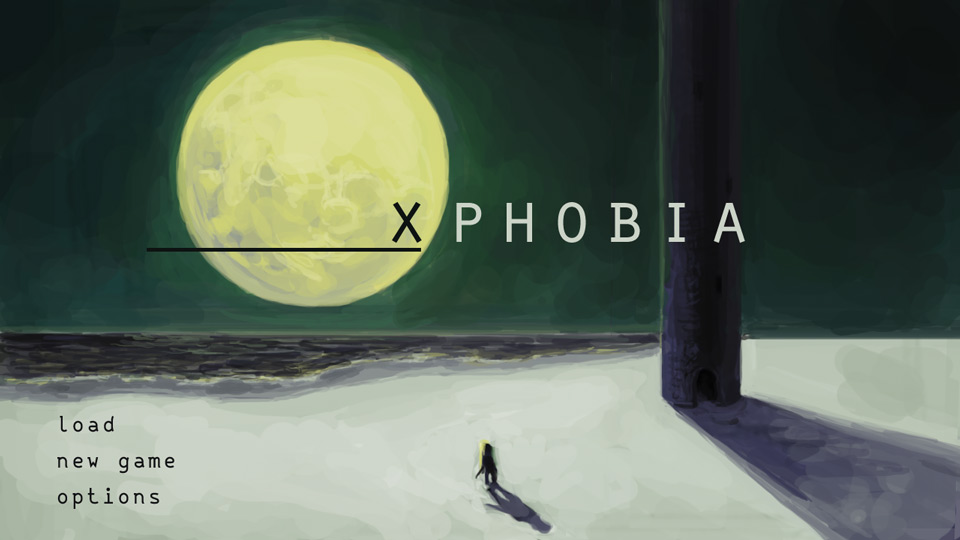
xPhobia Title Screen
xPhobia’s main menu, designed by RT

xPhobia is a top-down RPG for Windows 7 developed in XNA. The game features a lone hero, who has traveled to a surreal tower to defeat an evil god that has tormented him throughout his life. Each level of the tower is themed around a phobia the hero has. Between each level, players explore the hero’s past and make a choice that determines the fear the hero gains and the content of the next level.

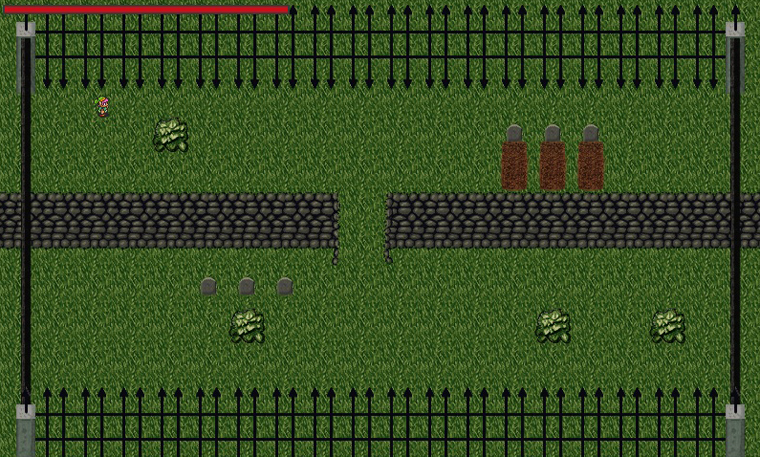
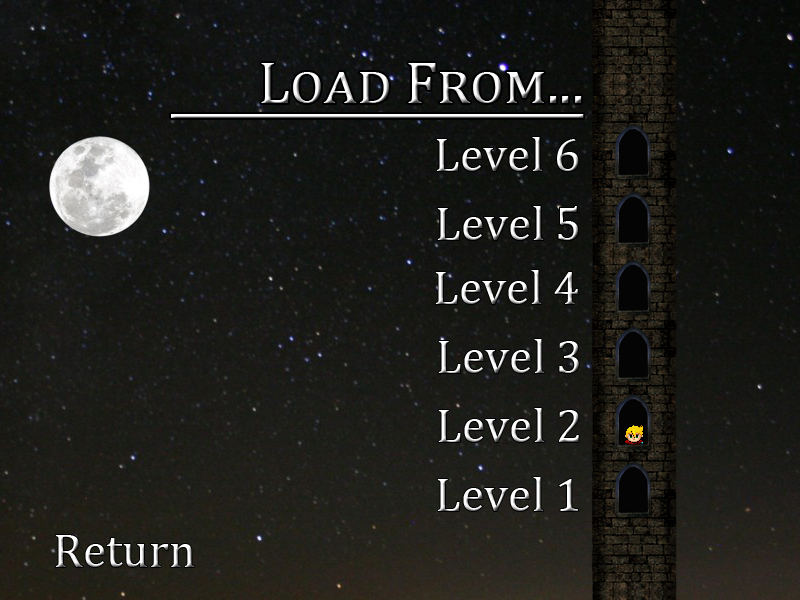
My work on this game includes outlining the characters and storyline, designing levels, designing and implementing many of the game’s menus, and creating the tiles that make up the environments in the game.

xPhobia Graveyard Tileset
A demonstration of the game’s graveyard tileset.
xPhobia Level Select
xPhobia’s Level Select menu