The Seeker’s Greatest Weakness

Dragon Age Dawn of the Seeker

Originally published on the Extra Life Community website
Edited by Jack Gardner

In 2012, Oxybot, the producer of Appleseed and Vexille, released Dragon Age: Dawn of the Seeker, a CGI movie based on BioWare’s Dragon Age. The film follows Cassandra, a fierce and loyal member of the Seekers and a talented dragon hunter. The loss of her brother, who was killed by mages when she was a child, however, has made her bitter, angry, and prone to violence and recklessness. Her mentor, Byron, believes that her fury blinds her and will get her or someone else killed. Her behavior frequently endangers her and her companions. Contrary to his warnings, Cassandra demonstrates inhuman strength and imperviousness to damage, leading one to wonder what she or her companions have to fear by her thoughtlessness. Indeed, her need for revenge for what happened to her as a child seems to fuel her uncanny strength more than it hinders her. The only attack in the movie that seriously damages Cassandra reveals her true weakness. Blind fury doesn’t make Cassandra vulnerable. Her unfortunate choice to not wear pants leaves her true vulnerability fully exposed: her “Achilles heel,” her left thigh.

Cassandra, born into a family of talented dragon hunters, serves the Chantry as a Seeker to avenge her older brother’s murder. As a member of the Seekers, the most loyal of the Templar knights, Cassandra maintains balance and order between knights and mages. When she catches her fellow Seeker Byron kidnaping Avexis, an elf girl with the power to control beasts, however, she begins to question her loyalties. Byron believes that the High Seeker is conspiring with mages and holding Avexis hostage as part of their plans. When Byron dies protecting her and Avexis, Cassandra continues his mission to discover the truth. To do this, she must disobey the Chantry and trust an allied mage named Galyan.

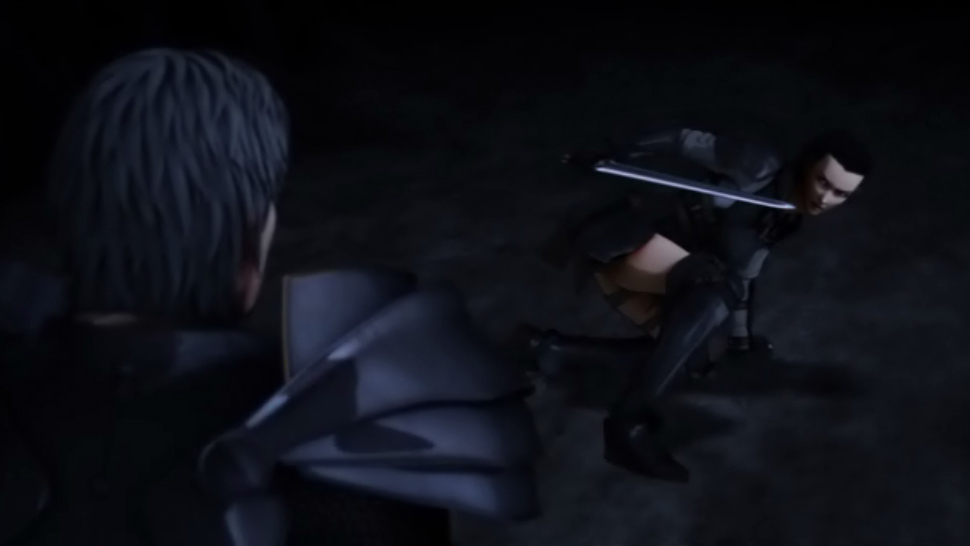
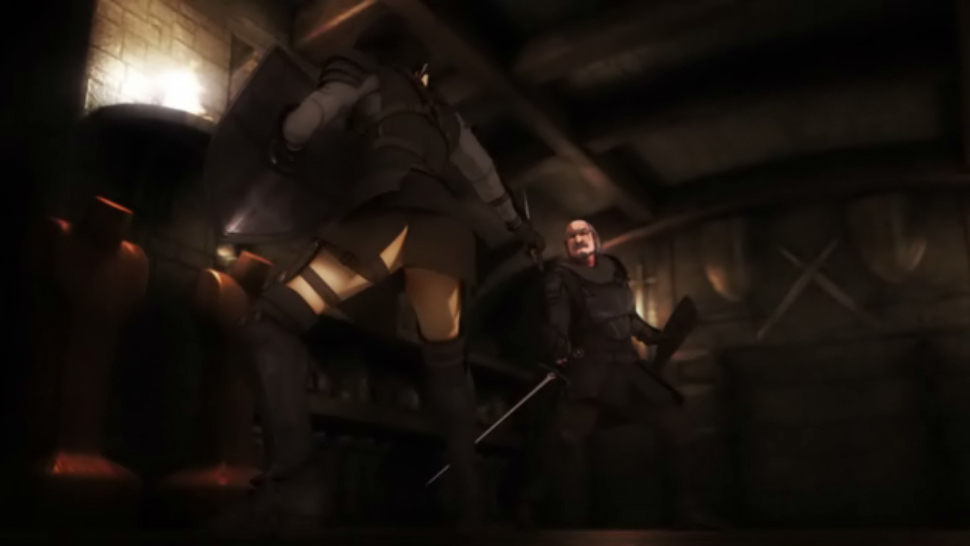
Cassandra’s anger frequently puts herself and others into dangerous situations, which makes it easy to assume that she must learn to control it to achieve victory. Her uncontrolled temper shows from the first fight scene of the movie when Byron finds Cassandra hacking away at the corpse of a mage in a fit of rage, leaving her unaware of her surroundings and open to attack. Byron demonstrates Cassandra’s weakness again when he defeats her in a sparring match by using his shield as a weapon. He explains that she has blinded herself with vengeance and can’t see all the possibilities available to her.

The consequences of Cassandra’s behavior escalate when her recklessness kills Byron. During their escape from the Chantry with Avexis, a large group of mages ambushes Cassandra and Byron. Byron recommends that they retreat, but Cassandra takes the opportunity to kill more mages. Fearing that they will kill her, Byron stays and fights, too. He dies while protecting her, and the mages recapture Avexis. Cassandra laments that this wouldn’t have happened if she had retreated.
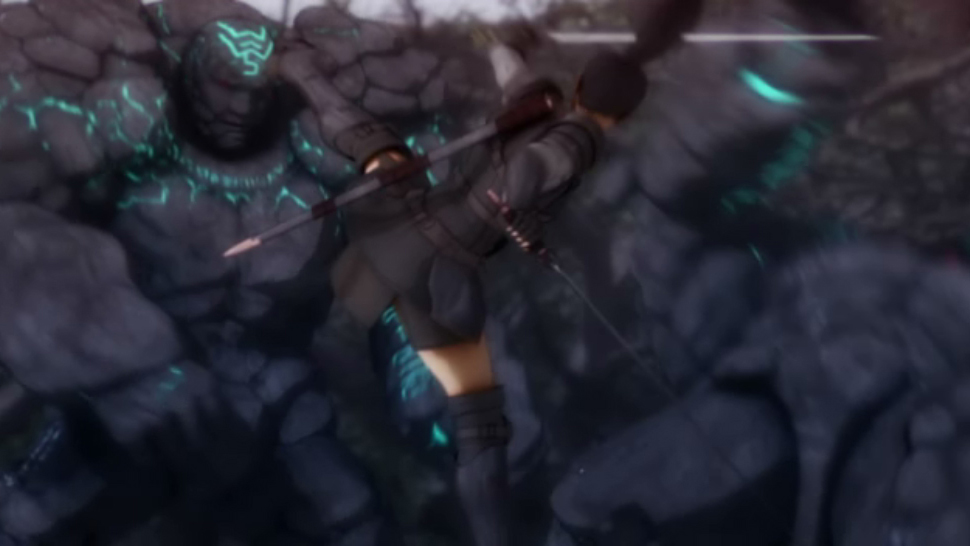
Round-house kicking a giant rock monster

In the scope of the entire movie, however, Cassandra’s mindless rage never really puts her in danger, causes her grief, or proves to be an obstacle. She demonstrates superhuman strength and damage resistance, which suggests that nothing poses a threat to her even when rage consumes her. In the course of a few days, she murders dozens of people and monsters. She can kill dragons with a knife, fistfight armed and armored knights into unconsciousness, and swing a sword hard enough to cut through armor and chains. She even delivers an effective round-house kick to a rock monster’s face. Among other damage she receives, she survives a massacre as a little girl, jumps off three cliffs, stands on top of a flaming monster and doesn’t burn, and smashes into walls and the ground multiple times. The characters also recognize Cassandra’s abilities as exceptional. The Clerics express amazement when they hear that she killed a dragon by herself. Byron says that he knows no man better with a sword than her. Galyan sees her as the bravest person he’s ever met. The leader of the enemy mages retreats only when he recognizes Cassandra among the knights surrounding him at the end of the first fight scene. Cassandra and others refer to her as a member of a legendary dragon hunting family.

Byron’s death, the most devastating consequence of Cassandra’s blind fury and the most likely to convince her to change, ultimately doesn’t affect her. She even stops believing that she caused it. Less than thirty seconds after Byron passes away, Cassandra attempts to kill his friend Galyan, and her thoughtlessness continues for the rest of the movie. As soon as she discovers the person truly behind the conspiracy within the Chantry, she blames him for killing Byron instead of herself. After she defeats the conspirator, she briefly takes Byron’s last words to heart: “Hate can only breed more hate.” In Byron’s memory, she shows the traitor mercy by allowing him to live… but then beheads him anyway.

Despite Byron’s and Galyan’s insistence that Cassandra’s anger impedes her, Cassandra uses her pent up rage and impulsiveness to their advantage at every opportunity. She kills dragons and monsters at least fifty times her size and dozens of mages who would have killed her or members of the Chantry if she hadn’t. She intimidates an elf to gain valuable information. She saves herself and Galyan when she decides to jump off a cliff to escape the Templar knights. Despite everyone except Cassandra thinking that her rash decision would kill them, she and Galyan survive the fall. Instead of learning to control herself throughout the story, she instead convinces Galyan that her fury helps rather than hinders her. Originally a pacifist who dislikes Cassandra’s foolishness and need for revenge, Galyan tosses Cassandra the sword that she uses to execute the conspirator and admits that he should have let her kill him sooner. He also seems to reinterpret her recklessness as bravery. Perhaps if Byron had more trust that she could protect herself while he escaped with Avexis, he would have survived.

Cassandra’s rage doesn’t kill her more than it describes her, but she does have a weakness. This can be observed when Cassandra receives an attack that damages her left thigh. During a fight with 100 giant monsters, one of the beasts backhands Cassandra, which knocks her unconscious and cuts open her leg. This deep but small cut leaves her debilitated and vulnerable for two days. She can’t even defeat a single person when before she could cut down fifteen in minutes. Her reaction to this injury can’t be explained by the fact that a monster brutally smashed her out of the air. A similar attack later in the movie, where a large creature swats Cassandra into a brick wall, doesn’t damage Cassandra’s leg or incapacitate her.
Dragon Age Dawn of the Seeker Sparring

If Cassandra has a character flaw, her apparent preference for running around without pants on would be a better candidate. This choice leaves her thighs, and thus her weak point, fully exposed. Byron and Cassandra escape the Chantry with Avexis late at night when both of them wear light armor as opposed to full armored suits. Cassandra happens to not be wearing pants and must continue without them for the rest of the film. Sure, she and Byron had to make a quick escape, but why would she casually wear light armor with no pants in the first place?

While Cassandra stubbornly refuses to change her personality, she does more than put clothes on to conceal her Achilles heel at the end of the movie. In the first fight scene, Cassandra wears a suit of armor, and when she returns to the Chantry as a hero for exposing the conspiracy, she wears it once again. This armor defends Cassandra so well that even magic bounces off of it as can be seen during the first fight. Perhaps if she wore it through the whole adventure, she would be invincible and have nothing to worry about regardless of who or what she decided to swing a sword at.

Dawn of the Seeker leads the audience to believe that in order to fulfill her goals, Cassandra must learn to solve problems with means other than recklessness and violence. The hopes that Byron and Galyan had for her becoming a more tactful and forgiving person, however, go mostly unfulfilled. Aside from befriending a mage, Galyan, Cassandra shamelessly chooses the path of rage and revenge from the beginning of the movie to the end. She not only survives but also shows that her personality doesn’t make her weak. Her childhood trauma haunts her, but it has also made her strong. She doesn’t need to change her temperament to protect herself. When an attack to her left thigh can nearly kill her while everything else has no effect, putting on pants appears to be the more reasonable course of action.
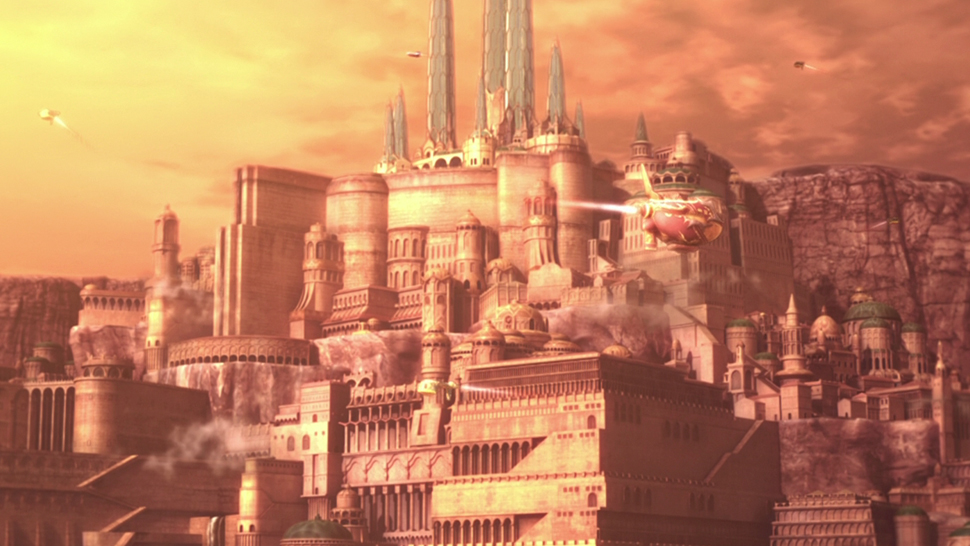
The Art of the World

.hack//Beyond the World

Originally published on the Extra Life Community website
Edited by Jack Gardner

The .hack multimedia franchise began in 2002 and now spans video games, anime, movies, manga, and novels that all explore the fictitious online roleplaying game (ORPG) known as The World. .hack//Sign, the animated series that began the franchise, centers on Tsukasa, a player who, after waking up in a dungeon, finds himself trapped inside the ORPG with no terminal in front of him to log off of. On his journey to find out what happened to him and why, he must also come to terms with the cruel reality waiting for him in the real world. One of the latest entries into the series, the computer-animated movie .hack//Beyond the World, tells the story of Sora, a technology-averse teenager who is persuaded to play The World. Initially hoping to become more connected to her technology-obsessed friends and love interest, she instead finds herself entrusted with saving not only the game but also the entire world. Like the anime series that preceded it, .hack//Beyond the World makes a visual distinction between the game, where part of the movie takes place, and the real world the characters live in. The artistic choices in both works complement their stories’ commentary on gaming, Internet addiction, and social connection or disconnection in the age of technology. .hack//Beyond the World, however, isn’t as successful in creating a believable and relatable story because it doesn’t also use its art style to elaborate upon its characters as .hack//Sign does.

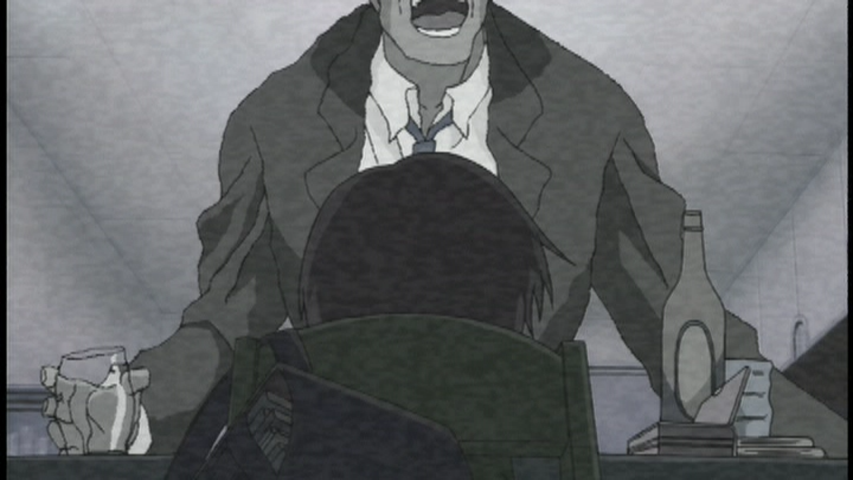
.hack//Sign takes place almost exclusively inside The World with brief fragments of the real world appearing in some episodes. These settings have different moods that are heavily laden with the emotions of the characters who inhabit them. To Tsukasa and his friends, The World is an escape from reality for various reasons. What each of them faces is only hinted at throughout the series, but the dreariness depicted in the scenes showing the real world conveys their feelings well enough. Reality is shown through grainy and desaturated footage. Character’s faces aren’t usually shown, and if they are, their eyes are hidden in deep shadows. No sounds can be heard other than music or static, and if there is dialog, the words are only displayed against a black background. It’s as if we’re viewing the scenes from the perspective of people so internally focused on their own pain that the world around them has lost detail. Only in the last episode does the real world gain sound and color as Tsukasa and his friends have each fulfilled some desire that makes reality a much more bearable place.

.hack//Sign Real World

The game, while it appears happier for the characters than reality, is just creepy enough to serve as a reminder that beneath the surface there is something wrong. Scenes taking place here are colorful and have sound, dialog, and characters… as expected. Occasionally, however, shots are sideways, upside down, tilted, held at a distance for an abnormally long time, or focused on a random object in the scene reminiscent of the unusual shot choices in scenes taking place in the real world. The color palette is usually dark and the score is haunting. Frequently, these elements create a dark and mysterious atmosphere. The happier mood is tainted by some unseen or unaddressed problem.

About half of .hack//Beyond the World takes place in the real world while the rest takes place inside the ORPG. With its pastel coloring and use of 2D elements, the real world is shown as dull, flat, and ordinary, but it isn’t a bad place. Scenes can be well described as moving paintings. The 3D character models appear to have painted textures and light cell-shading. In many cases, all or part of the environments are 2D painted textures that are composited with the 3D elements in the scene. The coloring of everything is soft and muted. In contrast, scenes that take place inside The World have semi-photorealistic 3D graphics, depicting an adventurous and awe-inspiring environment. The cell-shading is gone, the colors are saturated, and most scenes are composed entirely of 3D models. Camera movements are also more dynamic and exciting, including point-of-view shots and spins.

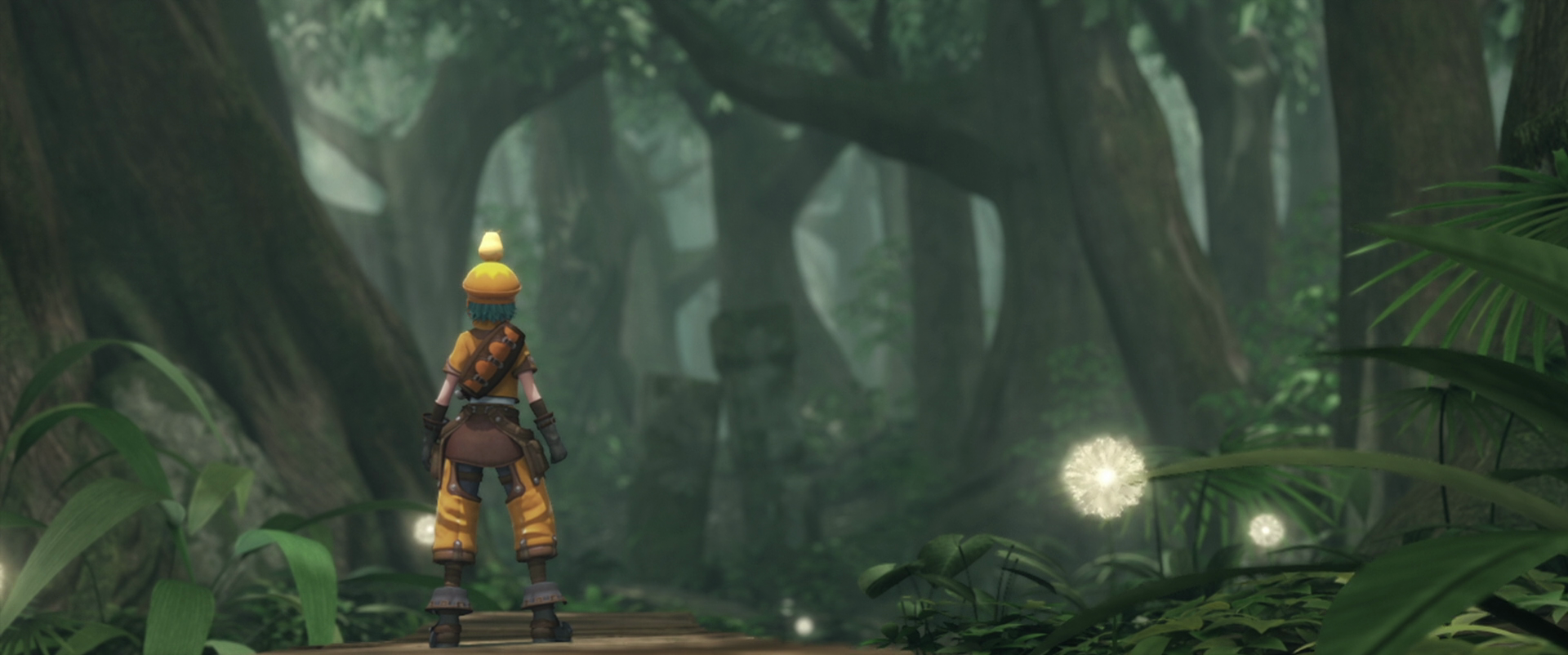
.hack//Beyond the World Game World

Unlike those in .hack//Sign though, the two worlds have a similar tone to one another. When one is in chaos so is the other. While initially The World is amazing to Sora, it soon becomes the new ordinary. This, however, is consistent with a theme that runs throughout the movie: the real world and the digital world have differences but are overall the same. When Sora is finally convinced to try The World, she isn’t particularly happier there or more connected to the people around her. She is as clueless about ORPGs as she was in reality and as content to train by herself as she is to train with her friends. While it appears that her parents have separated and she feels somewhat disconnected from her classmates, her life isn’t particularly depressing. Her experiences in the game are as confusing and frustrating as they are extraordinary, which doesn’t make it much of an improvement. By the end of the movie, her feelings towards both worlds are still neutral.

Let’s face it. .hack//Beyond the World and .hack//Sign are about people in the near future playing World of Warcraft with VR headsets. The success of their stories depends on convincing the audience to care about fetch quests, boss fights, leveling up, and the possibility that the characters might die in a game where they have an infinite number of lives. .hack//Sign accomplishes this by giving the game believable real-world consequences. Player killing is equated to bullying. Failing a time-sensitive fetch quest is devastating to someone who didn’t have any self-confidence to begin with. Breaking up a faction also breaks up a friendship. As has already been discussed, even how the setting looks and sounds mirrors the thoughts and feelings of the characters. While these events don’t have widespread repercussions, they show that the game has a real effect on the characters and make the game’s more farfetched elements easier to believe. For example, an anomaly within the ORPG can cause players to fall into an unconscious or comatose state in the real world. By the end of the series, we still don’t know much about the players behind the controls, but through the emotions we’ve experienced with them, we want them to find happiness in the real world… even if they have to defeat an AI powered by negative emotions to do so.

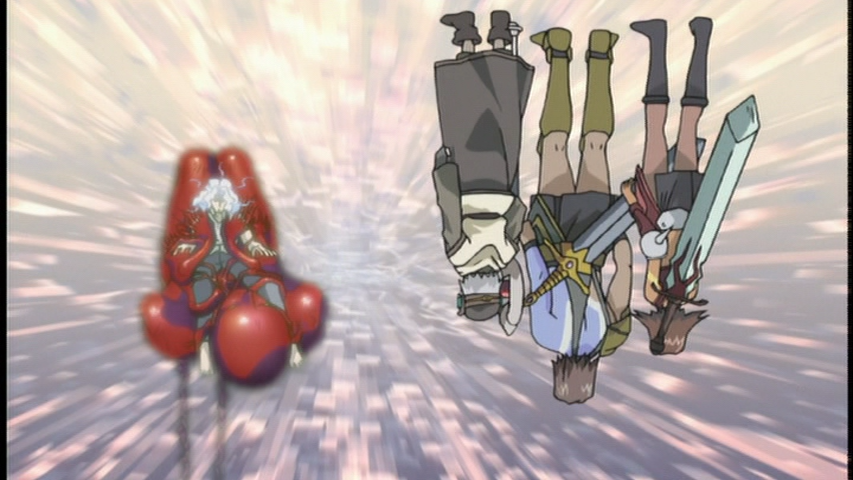
.hack//Sign Game World

.hack//Beyond the World gives the game much more devastating and widespread real-world consequences, but because it never takes the time to show how the game affects the protagonist, who we spend most of the movie with, it stretches the suspension of disbelief and fails to convince us that we should care. A computer virus has infected networks and servers around the world, including The World’s game servers. With electricity and networks down worldwide, reality is in chaos. In the game, the virus appears as a black cloud that destroys 3D assets and infects the brain signals of the players, causing them to fall into a comatose state. To save both worlds, Sora must find Aura, an artificial super-intelligence within the game, and give her information she needs to destroy the virus. The audience, however, has no reason to believe that Sora would do this. The World hasn’t had a significant effect on her personally. Even after playing it for a while, Sora still doesn’t seem to care that much about anyone or about technology. She continues holding her friend Tanaka, who she has a mild crush on, at a distance, and stops playing The World after a minor argument. When Tanaka becomes a comatose victim of the virus, Sora resolves to save him in an uncharacteristically impassioned outburst, but when everything is over, nothing about Sora changes. In the final minutes of the movie, she tells her friends of her indifference towards continuing to play The World. The final image is apparently of her enthusiastically breaking Tanaka’s cellphone to get his attention. Despite everything she went through, she is as disconnected and indifferent as ever, leaving us wondering why she even bothered.

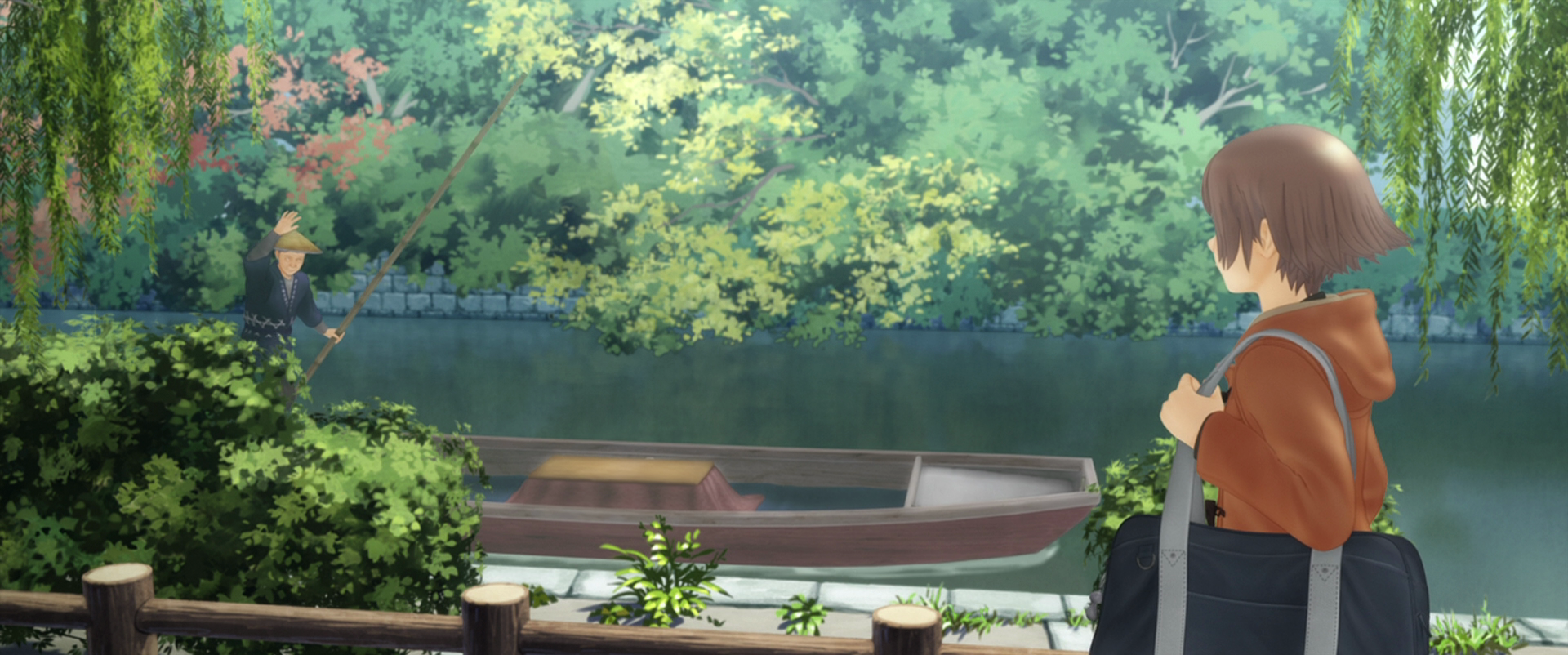
.hack//Beyond the World Real World

In a story about a fantastic, futuristic ORPG, providing the audience with a way to relate to the characters is crucial to the story’s believability. The art style in .hack//Sign is only one of many ways that it explains the characters and their relationship to the worlds they live in. The ORPG serves as an escape from reality and a place to work through personal feelings. In .hack//Beyond the World, the differences between worlds appear to be superficial, which mirrors the movie’s theme that the virtual and real worlds are only different ways to communicate with people; one isn’t better than the other. The movie, however, fails to provide an alternative to the art style to explain its characters. As a passionless and randomly impulsive individual with unclear goals, Sora is difficult to understand. In turn, it’s difficult to care about or believe the final scenario where she must save an ORPG to save the entire Internet. By using its art style to the fullest, .hack//Sign is able to take the audience on the emotional journey of a handful of anonymous people in an alien environment. .hack//Beyond the World tells a grander tale, but its believability suffers from inferior visual storytelling.

Digimon X-Evolution

A Digimon CGI movie? How did I miss this?

You know you’re in for some high-quality animation when the only official trailer isn’t even dubbed.

Write a Novel for Extra Life

Hey, writers! Want to start National Novel Writing Month with a bang? I’m writing 24 hours (or more) November 1-3 to raise money for my local children’s hospital as part of Extra Life. If you’d like to join me, follow me on Twitter. I’ll follow back.

You can donate to my fundraiser here. For every dollar you donate, I’ll beta read 1,000 words for you. See this page for more information on what I like to read and what to expect for feedback.

Here are some additional details:

  • If you make a donation and would like me as a beta reader, send me a tweet or DM to introduce yourself and tell me about your project. 🙂
  • My offer applies up to 200,000 words across all donors.
  • My beta-reading pace is about 20k-25k words per week.
  • I’ll fulfill requests starting January 1st, so take November to write and December to clean up your manuscript. Or take even longer! I’ll give you an IOU.
  • Feel free to tweet or DM me if you have questions.

If I like it, I may read your whole story no matter how much you donate. In addition to raising money for sick and injured kids, I think of this as an opportunity to find new critique partners and writer friends. 😀

Oh, and if you’re interested in what I’m writing, here are my answers to Sophie Li‘s NaNoWriMo 20 Questions Tag!

The NaNoWriMo 20 Questions Tag

I have returned to answer 20 questions about Twelve’s Design, my novel I’m working on for NaNoWriMo!

1. Tell me about your NaNoWriMo project this year! Give me a blurb!

Three years ago, Logan Cusick, a high school senior with a bright future, mysteriously vanished from Blue Mountain Forest. Now six months before the world’s predicted end–December 12, 2012–psychic Seth Rose, haunted by Logan’s memories, hunts for Logan’s abductor, a monster named Rio Lamar. If he’s honest with himself though, he doesn’t know where to look. That is until he discovers a dark energy surrounding Logan’s troubled brother Eugene.

While Seth suspects Rio Lamar has returned to execute some devious plan, other investigators disagree. Eugene’s friend Esarose Porter fears creatures from the forest took Logan and have returned to take his brother. Brand Danil, an alien-obsessed stalker, thinks extraterrestrials abducted Logan and have plans for world domination. And Seth’s business partner Conrad Xiao Hong believes the anguish surrounding Logan’s disappearance has attracted a powerful demon.

Even without their conflicting opinions, identifying their enemy and how to stop it won’t be easy. The dark entity following Eugene provides as few cryptic clues and outright lies to its origins and intent as Eugene does to what hides beneath his carefree façade. Seth and his fellow investigators scramble to discern the truth before they find out what really happens on December 12.

2. What’s the genre?

New Adult, Paranormal, Psychological Thriller

3. Describe your MC in three words.

scarred, selfless, snarky

4. Without spoilers, describe your villain in three words.

manipulative, familiar, generous

5. What is your goal?

I hope to finish rewriting a rough draft of the final two chapters of the book, so I have a better idea of how it will end. In the previous draft, these chapters had about 45,000 words. I’m hoping that number will decrease.

6. Is this your first draft? Second? Third?

It depends how you count them. I originally wrote this story in 2006. Back then, it was actually two novellas known only as Book 3 and Book 4. They bore little resemblance to what Twelve’s Design is now, but some core ideas and characters have survived. I wrote two drafts of Book 4.

I picked these stories up again in 2009 where I wrote two drafts of a new story based on them. The first draft combined the stories together but kept one of the main plot devices: the main character had amnesia. The second draft was born from asking myself, “What if he remembered everything?” These drafts are where the story started to resemble the modern Twelve’s Design.

Since picking the manuscript up again in 2016, I’ve written two drafts and am currently working on the third.

tl;dr This is about the fifth-ish draft.

7. Are you starting a new project (or draft), or continuing an existing one?

Continuing!

8. What is your favourite time to write in the day?

Late at night, but I also like bingeing at all hours of the day on weekends.

9. Where are you going to write?

At my desk and “standing desk” (a bookcase).

10. Computer or paper?

When I’m writing a new story, I do all my planning and outlining on paper. I also write the first draft on paper. Then, I transcribe everything to Word for editing.

With Twelve’s Design, I do almost everything on the computer. I even use Trello and Evernote for notes. The only things I don’t have on computer are the room/house blueprints I draw to help me visualize scenes and a map of the city the book takes place in with key locations marked.

11. How are you going to make time to write?

I’ll probably keep doing what I’ve been doing: blocking out a few hours every night to write/edit. I’m also thinking about doing a 24-hour writing marathon on November 1-3 as part of Extra Life, which I do something for every year.

12. Are you going to participate in local or online NaNoWriMo events?

I may not even officially register for NaNoWriMo. I never know how to count the words I’ve written/edited at the end of the month, so I usually participate in spirit.

13. Do you write from beginning to end or skip around?

I’m editing linearly for the most part, but when I planned and wrote the early drafts in 2009, I intentionally wrote Twelve’s Design as a collection of scenes that I eventually assembled in a linear order. Actually, I’m still moving them around!

Besides Twelve’s Design, I usually write linearly, but I skip around, too, if future scenes demand my attention.

14. Planner or pantser? (or plantser?)

Planner. Even if something changes when I’m mid-way through writing, I’ll usually pause to make a new plan. I often speed write the entire book or select scenes before I start writing.

15. What will be your go-to NaNoWriMo snack?

I wear Invisalign orthodontic appliances with rubber bands at the moment, so taking all that off to snack is a hassle. I’ve enjoyed tea lately though!

16. Choice of caffeine? (or no caffeine?)

Tea (mostly non-caffeinated)

17. Any rewards for milestone achievements? For finishing NaNoWriMo?

Hmm. Not really. I’m working until I finish this draft and can pass the story around to beta readers again. I’m nervous but also looking forward to hearing what people think.

18. Share a tip for other NaNo-ers!

I don’t know if anything I’m doing is correct or good or will ever amount to anything, but I still enjoy writing for fun… So, write for fun? Or don’t. I don’t know.

Also, always portray yourself as happy, inspirational, and confident! 😛

19. How are you feeling about NaNoWriMo?

I’m not nervous about NaNoWriMo itself. I’m more nervous about if I can finish this draft in time to meet my self-imposed deadline (December) and what it will look like in the end. This is the first draft where I’m writing a different ending from the one I envisioned in 2009. Will I like it? Will it be an improvement? I don’t know. I guess I’ll find out.

20. Share an aesthetic for your NaNoWriMo novel!

These are mostly just pretty pictures of the setting, but enjoy!
Twelve's Design Setting

Image Credits

Update

Twelve’s Design

So… almost two months have passed since my last update. I overbooked myself last month, but I’m back. I’ve almost finished Chapter 4 of Twelve’s Design and am transitioning into Chapter 5. Well, I’ve made the decision to break the book into more chapters, so Chapter 4 will become Chapters 5 and 6 and Chapter 5 will be Chapters 7 and 8. I’ll probably think of the book in terms of the old numbering scheme for a while longer though since my notes are organized that way. I hope more chapters will smooth out Chapter 5, which has a ton of stuff in it, and other messy chapters in the second half of the book. It does make me sad that Twelve’s Design will no longer have twelve chapters. I can live with either two groups of twelve chapters or three groups of six chapters though. >:D

OokiiSoraCon Web App

I hosted the OokiiSoraCon website for pre-convention testing purposes… somewhere on this domain. I’ll keep it secret for now because, while I did follow a security-minded tutorial to implement it, I don’t know how secure it really is. Now I’m squashing bugs and implementing requests as revealed by the members of the OokiiSoraCon staff that tested it. I question if an OokiiSoraCon video game will happen this year, but we’ll at least have THIS. You’ll have to come to the convention to find out what. 😛

The Writer’s Net

I’ve mostly finished implementing the React half of The Writer’s Net. All I have left to do is finish implementing the map. For some dumb reason, I decided to update my old code to the newest version of D3 while also refactoring it for use as a JavaScript module. So, adding it to the application hasn’t been as simple as importing it into the project and attaching the right connections. When I first started this React implementation of The Writer’s Net though, I had no idea how those connections would even work. Refactoring the code has helped solidify that. Now I just have to get it work!

The time I’ve spent learning the other technologies the NuCamp class has moved onto, however, has also slowed development. While I don’t exactly feel comfortable building mobile applications yet, I at least got familiar with React Native last month. Now we’re learning NodeJS, Express, and MongoDB for the backend logic and database portion of the JavaScript MERP stack. I have no idea what the best practices are for designing a database that stores redundant data intentionally, and it doesn’t look like the class will delve into it, so I guess I have more outside research to do to finish The Writer’s Net. I graduate mid-July, so we’ll see if I can at least have the application basically working by then.

Elysium

Something amazing and completely unexpected happened last month. I received an email from Matt and Adam Rovner, the co-writers of Elysium (2003)’s original script. They discovered the articles I wrote on the film and wanted to tell me what they know about its history. O.O Since then, we’ve run into multiple scheduling conflicts, but you can bet that when we get a meeting together, I’m writing another Elysium article. In the meantime, if you have any Elysium-related questions you must have answered, send me a Tweet @SilentFuzzle. 🙂

Update

Twelve’s Design and Camp NaNoWriMo

Twelve’s Design was going great. I was almost done with Chapter 2, and then… At the start of April, I decided on a whim to participate in Camp NaNoWriMo. In 2014-15, I hand wrote 75% of “Book 5,” an untitled loose sequel to Twelve’s Design. Ideas for how to finish it and modify it had haunted me for years, so I decided to set a goal to digitize and revise 60,000 words of it for Camp NaNo. I was able to implement many of the changes I wanted to make, and by the end of today, I’ll have met my goal.

Camp NaNo was fun and great for typing up a bunch of words in a short time. Toward the end, however, I missed my thoughtful approach to writing/revising. Many of the words I wrote for Camp NaNo already existed. Many of those are also filler that desperately need cutting, but I didn’t have time to think about how to shorten the book’s painfully slow and wordy sections. To give you an idea, I’m 60,000 words in and I still have two full notebooks left to transcribe! That’s even after I skipped at least 10,000 words from the two notebooks I finished typing. I suppose digitizing those shitty words so that I can delete them easier when I return to this story later was a step in the right direction though.

The bad news is I’m still near the end of finishing Chapter 2 of Twelve’s Design. I thought I would be able to keep up with it, but a bunch of other things happened this month that necessitated setting some things aside. I miss working on it a lot more than I thought I would. For now, Book 5 is out of my system though, and I’ll be able to return to Twelve’s Design tomorrow!

NuCamp and The Writer’s Net

Also last month, I learned the basics of React as part of NuCamp’s Full Stack Web Development course. For my portfolio project, I’m building The Writer’s Net, a website for writing, reading, and sharing non-linear fiction, using React. I had planned to finish building at least the framework for it before the React portion of the course ended last week, but because I participated in Camp NaNo and SakuraCon (convention season has begun!), I probably haven’t even implemented half of it. React is awesome though. I love it! It’s actually fun to use, and that’s probably the first web technology I’ve given that praise! …Why didn’t college tell me this existed!?

FirstStudent and OokiiSoraCon

Another thing I almost finished before I decided to throw Camp Nano into my life was OokiiSoraCon’s web application. I made a little progress on it, but I still have yet to fix a couple things, comment the code, test hosting it on a sub-domain, and build the Unity 3D side of the application. I suppose Camp NaNo isn’t entirely to blame. FirstStudent America hired me again, this time to test the capabilities of a web API the company is considering integrating into their business. Despite everything else I was doing last month, I couldn’t refuse the experience, and it might lead to another project in the near future if all goes well.

Update

Twelve’s Design

A time has passed since I last wrote one of these updates! In the past… month, I finished piecing Twelve’s Design back together and started editing. I “finished” revising Chapter 1, and if all goes well, I’ll get halfway through Chapter 2 by the end of this week. I’ve really tried to slow down and make the characters explain why they believe what they believe in this draft. This has produced some interesting side effects. First, it’s made it clear what aspects require more thought and explanation on my part. Second, the crazy characters have gotten crazier and the asshole characters, assholier. I love my loveable, crazy assholes… Third, the protagonist’s narration is changing quite drastically, but never has he expressed his thoughts and motivations so clearly. It’s great all around!

OokiiSoraCon

I finished a good chunk of the OokiiSoraCon AMP-stack web app and styled it with Bootstrap. The next steps include password protecting it, adding some database logging and user tracking features, connecting its data to a Unity 3D visualization, and creating that Unity 3D visualization. I’m not as far along as I’d like, but I suppose I am learning and using the MERP-stack to build a completely different web app at the same time.

NuCamp

Speaking of, for my MERP-stack web development course, I decided to build The Writer’s Net. Last month, I created a layout of all its pages in Bootstrap. It looks much nicer than what I threw together in .NET last I attempted to build this site! This month we’ll learn React, and I’ll implement everything using that framework. We’ll see how much of this I can complete in the next four months. The main goal of this class, and the OokiiSoraCon project, however, is to get more comfortable with web development. That has been a success so far.

Outlining Twelve’s Design

As some of you may know, I recently finished planning and outlining the next draft of Twelve’s Design, my paranormal thriller novel. Before I return to editing though, I thought I’d take a minute to share the tools I use to track the characters, locations, scenes, revisions, and notes for this book. I started using this system two years ago and have found it very helpful for finding useless scenes, tracking sub-plots and information, and managing my notes. Perhaps another writer out there will find this process helpful for their own book!

I use Trello and Evernote for keeping notes and outlining. Trello has been especially helpful though, so this post will focus on it.

The Outline

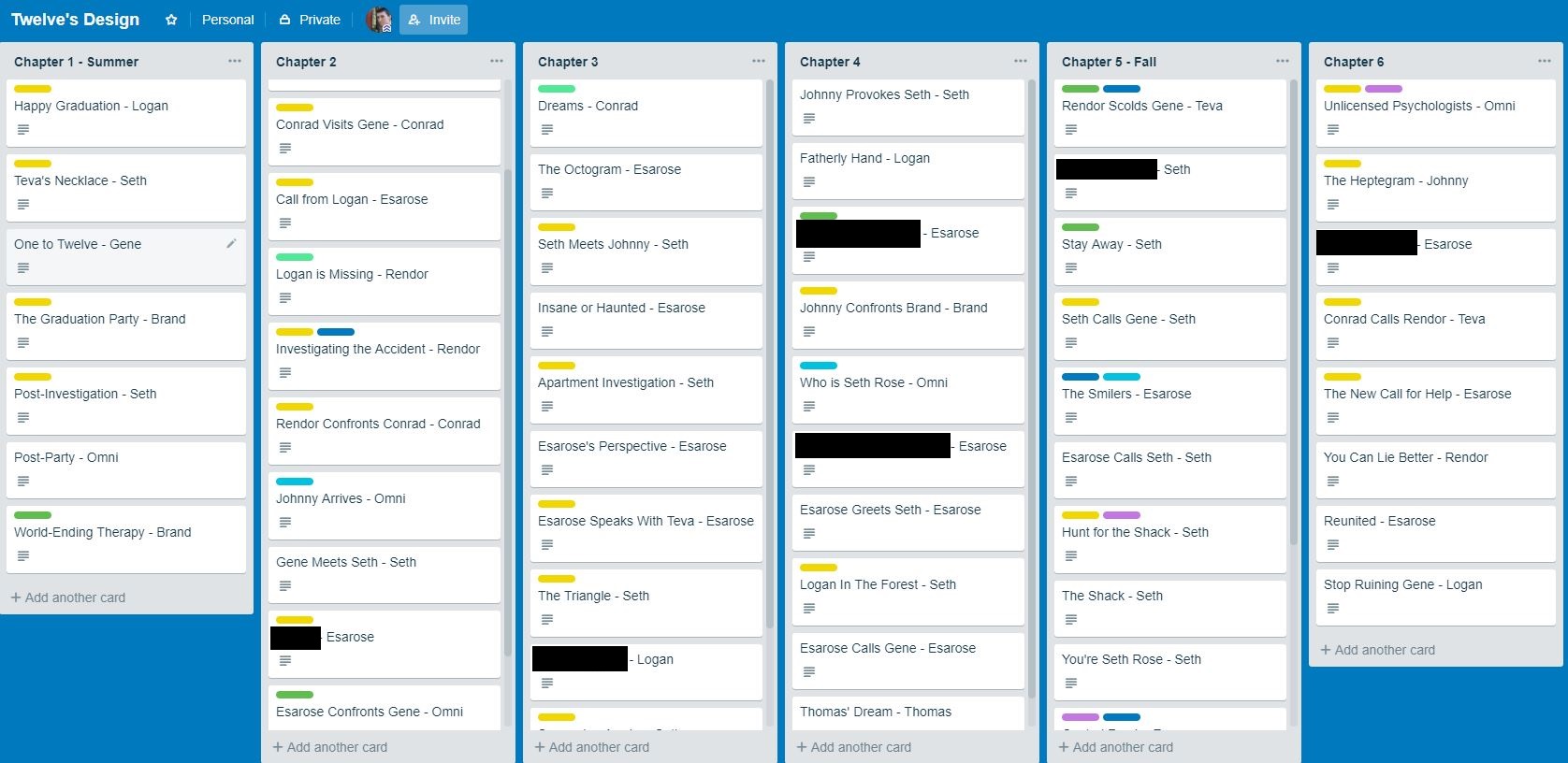
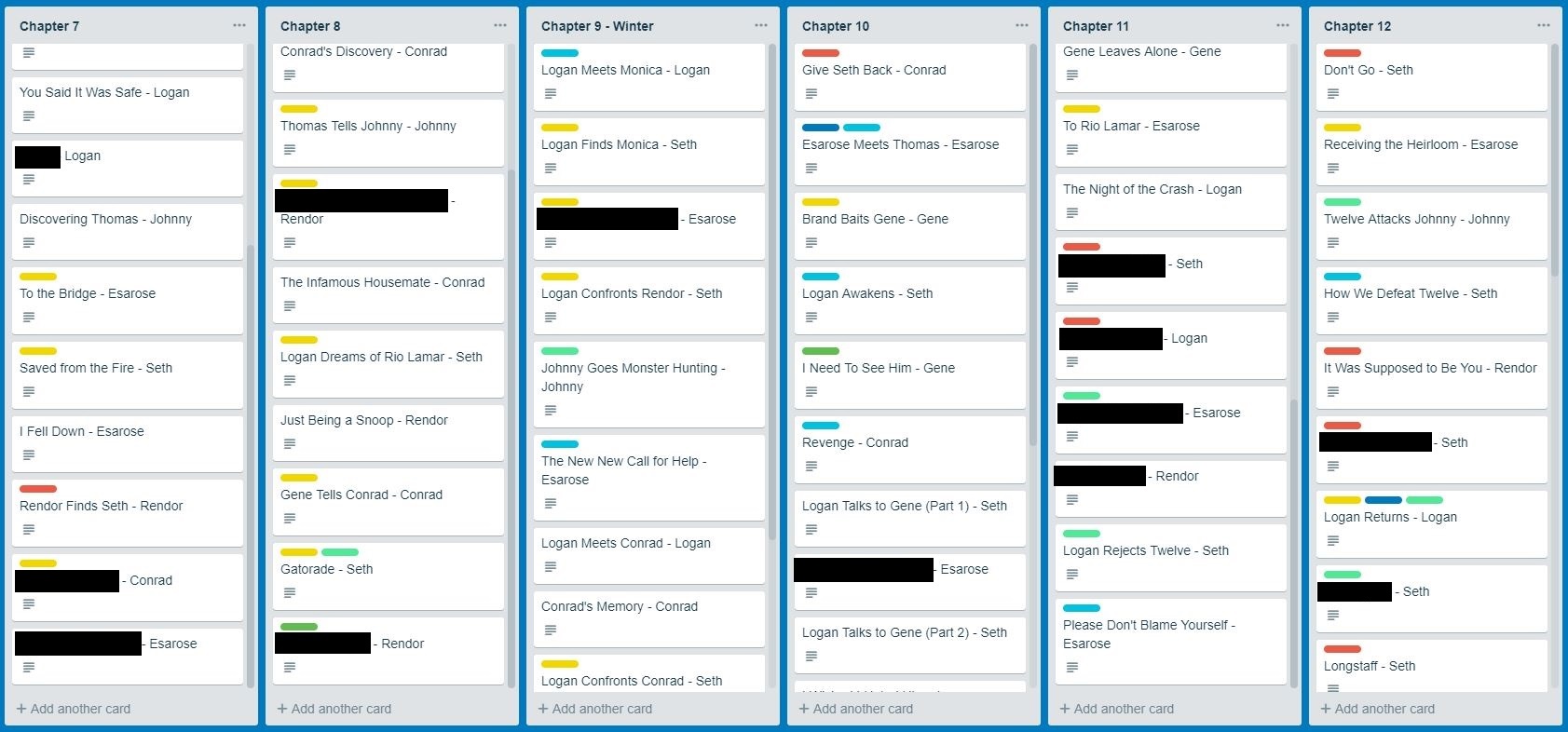
The images below show part of the Trello Board for Twelve’s Design’s outline. Spoilers are redacted. Each chapter in the book gets a list in Trello, and each scene gets a card. Card titles contain what happens in the scene and the scene’s narrator. The card content is usually sloppy, maybe even a little outdated, and the titles, boring. But hey, these are notes. I’m not obligated to make them look nice. 😛

Twelve's Design Outline Ch 7-12

Cards are labeled with one or more colors if I need to move, modify, or write the scene. As you can see, the outline is currently a rainbow that gets steadily more colorful as it approaches the end of the book. The color key is below:

  • Green – potential to minor content changes
  • Yellow – minor to major content changes
  • Light Blue – major content changes to complete rewrite
  • Red – new scene
  • Blue – move to a new location
  • Light Green – delete
  • Light Green with other labels – if you can’t fix it, delete it
  • Purple – clarify when this scene takes place

Since its first draft, Twelve’s Design has been a collection of scenes that need to happen at some point. This card system continues that tradition while making it easier to oversee and manage scenes. It shows me how narrators are distributed, so I can ensure I don’t have the same narrator for too many scenes in a row. I can also quickly move scenes around and visualize them in different orders before committing to one in a draft.

Scene Cards

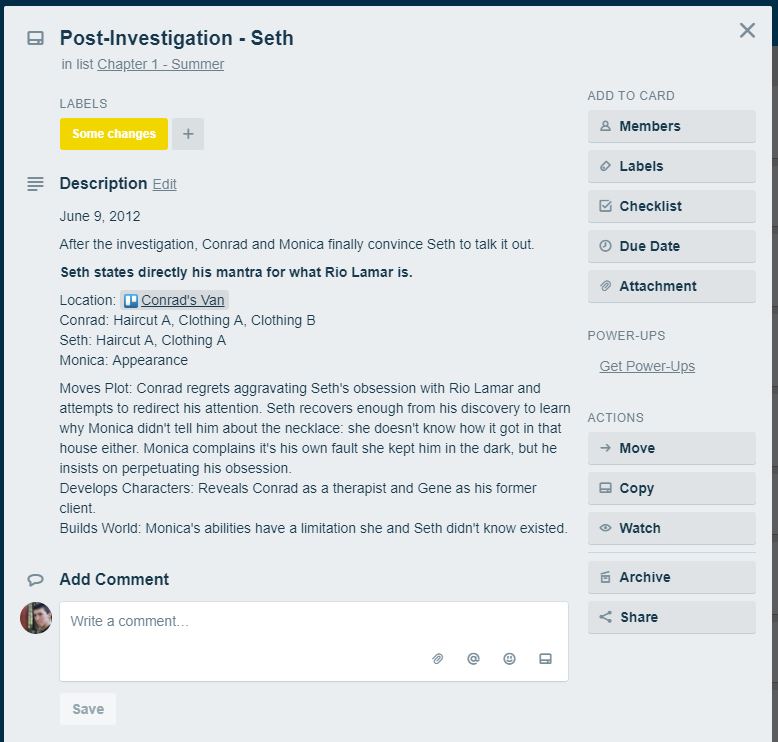
Twelve's Design Scene Card

Scene cards all have the same format. At the top is the date the scene takes place (the book spans six months) and a brief summary. If the scene needs modifications, notes regarding those changes appear in bold. The scene’s location and a link to a Trello Card with more information about it appears after that.

Next comes character descriptions. I used to obsessively detail characters’ clothing and appearances in the book until J.A. Pitts told me to stop it in my first writer’s workshop. Thank God! Now I dump all those descriptions in lists the characters’ Trello Cards to get them out of my system. The references (Clothing A, Haircut A, etc.) refer to those lists. A benefit of keeping this information in one place is if I change an outfit that a character wears in a dozen scenes, I only need to update my notes in one place.

The card’s final sections reveal the scene’s purpose in the book, how it moves the plot, develops the characters, and builds the world. If I can’t fill at least two sections, that tells me the scene is useless, and I should probably delete it or combine it with another scene. Each character in the book has a goal (sometimes a primary goal and a secondary goal). In the “Moves Plot” section, for each applicable character in the scene, I write a sentence about how that scene moves them toward or hinders them in achieving their goals. The “Develops Characters” section lists new information the reader learns about the characters, how the characters change, or how their relationships with one another evolve in the scene. Lastly, in the “Builds World” section, I write what new information the reader learns about the characters’ special abilities or the book’s creatures, locations, or mystery.

Character Cards

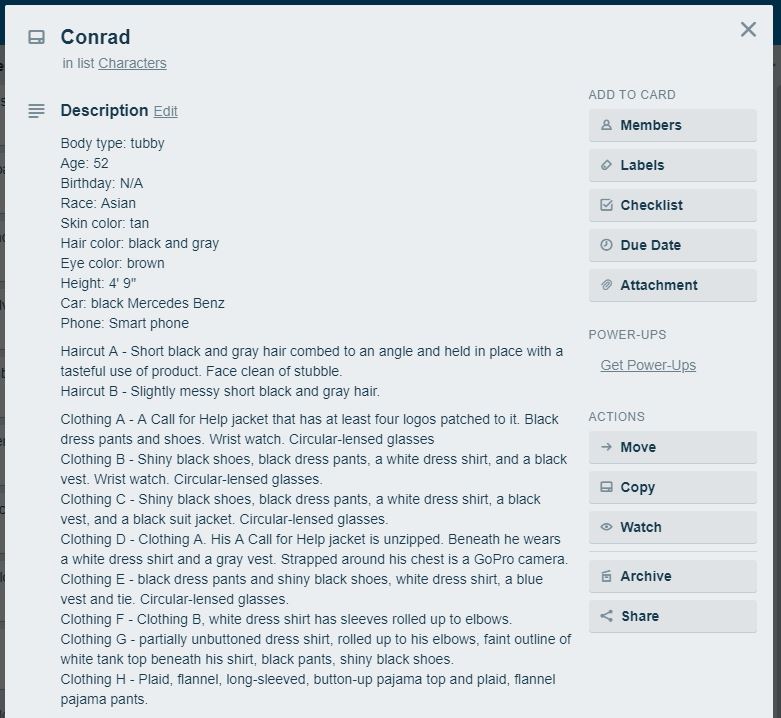
Twelve's Design Character Card

Above is an example character card. At the least, character cards contain a basic physical description and every haircut and outfit they wear in the book. Yes, I know I’m ridiculous listing all this clothing, but at least it’s not in the book! Character cards can contain more information such as what the character’s job is, what scars they have… or the history and terms of their probation period.

I also have a note for each character in Evernote. These notes primarily contain the character’s goals and motivations. I refer to them every time I need to fill out a “Moves Plot” section in a scene card. I also use Evernote to write stream-of-consciousness essays and short stories detailing the characters’ backgrounds, beliefs, and justifications for their behaviors.

Location Cards

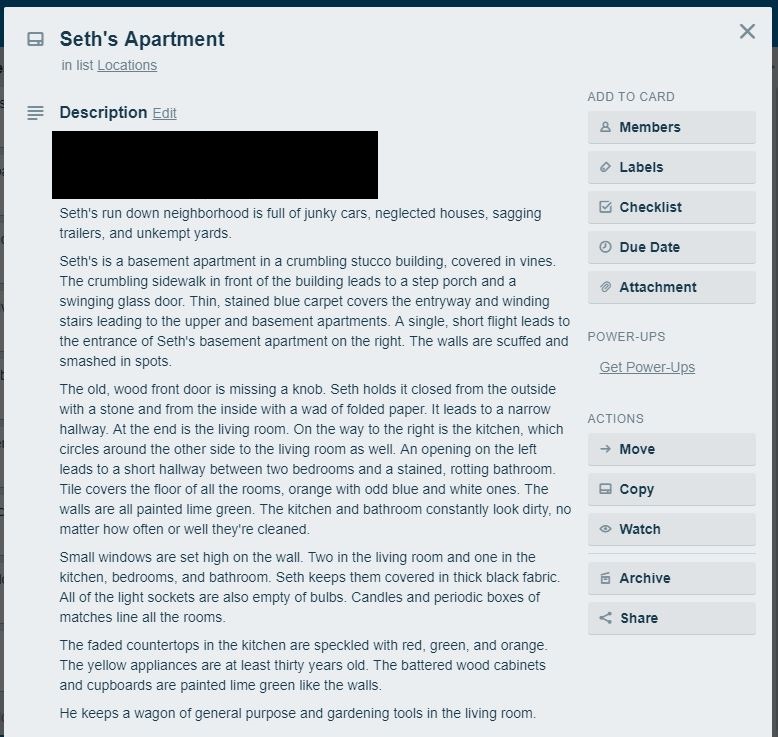
Twelve's Design Location Card

Finally, I dump detailed location descriptions in location cards. In this way, they perform a similar function to the clothing descriptions in character cards. I need them; the reader doesn’t necessarily. These cards may also contain a physical address (the book takes place in a real-world city). Fun fact: Seth’s Apartment is based on a real apartment a friend of mine rented, missing doorknob and all.

Conclusion

I also have Trello lists with cards containing research, ideas, and random notes. What I described in this post, however, is how I organize the bulk of my thoughts in Trello. Despite everything I need to fix in Twelve’s Design‘s next draft, I think this system has served me well. I hope discussing it has given you ideas on how to improve your own note-taking and outlining system. Tweet at me (@SilentFuzzle) if it does!

Even if it’s no help at all, it’s satisfying to start with a rainbow-colored outline and steadily remove labels until the book reaches what you envisioned… That is until you scatter yellow labels across it a week later when you realize something’s wrong. 🙂

Update

Twelve’s Design

The first chapter of Twelve’s Design went through Critters again last week. I got two beta readers on that but no one to read the entire book, but that’s okay. My second beta reader from Goodreads is turning out to be a nice sanity checker, so I’m done seeking beta readers and easing back into editing. Currently, I’m mapping what changes I’ll need to make in the next draft. Changes EVERYWHERE! I’m “almost” done and ready to go back to editing. The “almost,” however, hinges on fitting together all the pieces that made the cut and the replacements for the ones that didn’t in the last four chapters. That could take some time to figure out.

OokiiSoraCon

I formally proposed a design for this year’s OokiiSoraCon project and started building a prototype for the web application part of it. That half will have a PHP backend and the data visualization half will probably be a Unity 3D application.

NuCamp

NuCamp started. Last week, we got our development machines setup. This week, we’re starting to learn Bootstrap, which should help me make the OokiiSoraCon web application look at least decent. This week we’re also writing proposals for our portfolio projects, which will likely be the applications we develop steadily for the next five months. I’m a bit conflicted between pursuing The Writer’s Net and That’s Not An Argument. Or I could just team up on someone else’s project because, well, my projects tend to be a bit insane and impractical. 😛